
Search
Category
Related Industries
- How supply disruptions reshape chemical sourcing decisions worldwideGlobal chemical supply chain disruptions are reshaping sourcing. Explore smarter strategies for risk, compliance, dual sourcing, and resilient procurement.
- How to assess zero-carbon chemical synthesis catalysts for scale-upZero-carbon chemical synthesis catalysts: assess scale-up readiness through lifecycle emissions, durability, reactor fit, energy use, safety, and product quality.
- How to use a global chemical regulations guide for market entryUse a global chemical regulations guide to identify compliance triggers, reduce market-entry risks, and build a faster path to confident international chemical sales.
Weekly Insights
Stay ahead with our curated technology reports delivered every Monday.
Chemical innovation trends that matter more in 2026




Chemical innovation trends are becoming more decisive than broad market noise as 2026 approaches. In chemicals, durable advantage now comes from reaction efficiency, compliance depth, feedstock flexibility, and measurable environmental performance.
Across basic chemicals, solvents, additives, agrochemicals, and water treatment materials, the strongest signals are increasingly practical. They affect cost positions, export access, formulation stability, and long-term product acceptance.
For BCIA, these chemical innovation trends matter because they connect molecular behavior with industrial execution. The next cycle will reward precise chemistry, credible compliance, and resilient sourcing more than scale alone.
What chemical innovation trends mean in 2026
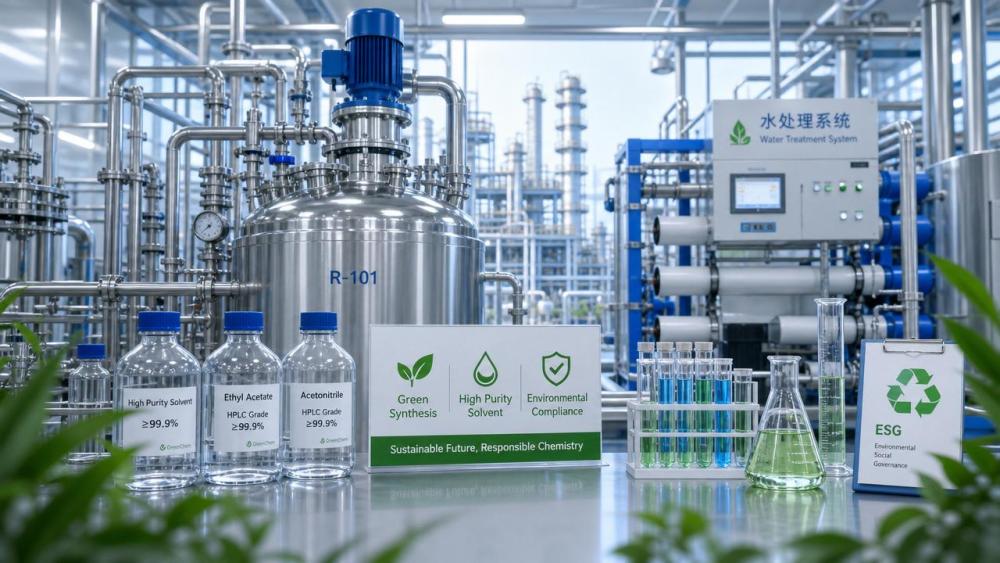
In 2026, chemical innovation trends will not be defined only by new molecules. They will be defined by how chemistry performs under regulatory, energy, carbon, and supply chain pressure.
That makes innovation broader and more demanding. A material can be technically effective, yet lose relevance if it faces registration barriers, unstable intermediates, or poor downstream compatibility.
The most important chemical innovation trends therefore combine four dimensions: formula performance, eco-compliance, economic resilience, and application fit. This is where market share and premium value increasingly converge.
A practical definition
Chemical innovation trends are the recurring technical and commercial shifts that change how materials are produced, formulated, approved, transported, and used in industrial systems.
They include cleaner synthesis, lower-toxicity substitution, smarter additives, solvent redesign, fertilizer efficiency, and advanced water treatment chemistry. They also include data-led purchasing and risk management decisions.
Industry background and the signals drawing attention
Several structural forces are shaping chemical innovation trends more strongly than short-term demand fluctuations. These forces are visible across commodity, specialty, agricultural, and environmental chemistries.
These signals show why chemical innovation trends now matter more than broad sector narratives. They create direct consequences for plant economics, export readiness, and downstream product positioning.
Five trend areas with high relevance
- Greener basic chemical synthesis using energy-efficient pathways and lower-emission process design.
- Safer solvent systems that reduce toxicity, recovery losses, and compliance burden.
- High-performance auxiliaries delivering flame resistance, weatherability, dispersion, and longer service life.
- Precision agrochemical inputs with stronger uptake, controlled release, and lower ecological stress.
- Water treatment chemistries improving separation efficiency, reuse rates, and industrial discharge quality.
Why chemical innovation trends create business value
The value of chemical innovation trends lies in their ability to improve both technical outcomes and commercial durability. Better chemistry now supports margin protection as much as product performance.
In basic inorganic and organic chemicals, innovation can lower energy intensity, reduce side reactions, and improve purity consistency. That creates stronger conversion efficiency for downstream applications.
In industrial specialty solvents, the key value is process reliability. High-purity solvent systems influence extraction quality, reaction selectivity, cleaning precision, and solvent recovery economics.
In polymer and coating auxiliaries, small formulation changes can create major gains. Flame retardants, plasticizers, stabilizers, and leveling agents directly affect safety, appearance, and lifespan.
In eco-friendly agrochemicals, chemical innovation trends support higher nutrient efficiency and better crop protection with lower residue pressure. This balance is becoming central to agricultural acceptability.
In water treatment and eco-chemicals, innovation reduces operating stress. Better flocculants, antiscalants, and treatment aids can lower sludge volume, improve reuse, and defend compliance baselines.
Core value drivers
- Lower total cost through yield, recovery, and energy improvement.
- Stronger compliance confidence in cross-border markets.
- Higher formulation barriers and product differentiation.
- Reduced supply interruption from feedstock or regulatory shocks.
Typical application scenarios across the chemical landscape
The practical meaning of chemical innovation trends becomes clearer when viewed by scenario. Different chemical categories respond to different technical and regulatory priorities.
This scenario view shows why chemical innovation trends are not abstract forecasts. They shape daily decisions on formulation design, raw material qualification, and technology adoption.
Practical guidance for tracking the right trends
Not every visible trend deserves equal attention. The most useful approach is to judge chemical innovation trends by evidence, transferability, and economic impact.
Questions that improve evaluation
- Does the chemistry solve a compliance problem or create one?
- Can the formulation maintain performance across variable feedstocks?
- Is the process scalable without unacceptable energy or waste cost?
- Does the material improve downstream productivity or only laboratory results?
- How exposed is the route to geopolitical and logistics disruptions?
A disciplined review often reveals that the best chemical innovation trends are not the loudest. They are the ones with repeatable plant performance and strong regulatory survivability.
Common mistakes to avoid
- Overvaluing novelty while underestimating registration complexity.
- Ignoring solvent recovery and waste handling in process economics.
- Treating additive substitution as simple when compatibility is formula-dependent.
- Following carbon claims without checking full lifecycle trade-offs.
A focused next step for 2026 planning
The most effective response to chemical innovation trends is a structured intelligence process. Track regulations, benchmark formulations, map feedstock risks, and test application performance in parallel.
BCIA’s domain coverage supports this approach by linking bulk chemicals, solvents, auxiliaries, agrochemicals, and water treatment chemistry into one decision framework. That makes trend analysis more actionable.
As 2026 approaches, chemical innovation trends that matter most will be those that combine molecular precision, eco-compliance, and resilient economics. Identifying those trends early can shape stronger, smarter industrial outcomes.
Recommended News