
Search
Category
Related Industries
- How supply disruptions reshape chemical sourcing decisions worldwideGlobal chemical supply chain disruptions are reshaping sourcing. Explore smarter strategies for risk, compliance, dual sourcing, and resilient procurement.
- How to assess zero-carbon chemical synthesis catalysts for scale-upZero-carbon chemical synthesis catalysts: assess scale-up readiness through lifecycle emissions, durability, reactor fit, energy use, safety, and product quality.
- How to use a global chemical regulations guide for market entryUse a global chemical regulations guide to identify compliance triggers, reduce market-entry risks, and build a faster path to confident international chemical sales.
Weekly Insights
Stay ahead with our curated technology reports delivered every Monday.
Chemical industry sustainability is now a sales factor




Chemical industry sustainability is no longer just a compliance issue—it is a decisive sales factor for distributors, agents, and channel partners serving global manufacturing and agriculture. As buyers demand greener formulas, traceable sourcing, and lower lifecycle costs, companies that align performance with eco-compliance gain stronger market access, customer trust, and pricing power in an increasingly competitive chemicals landscape.
Why chemical industry sustainability now directly affects channel sales
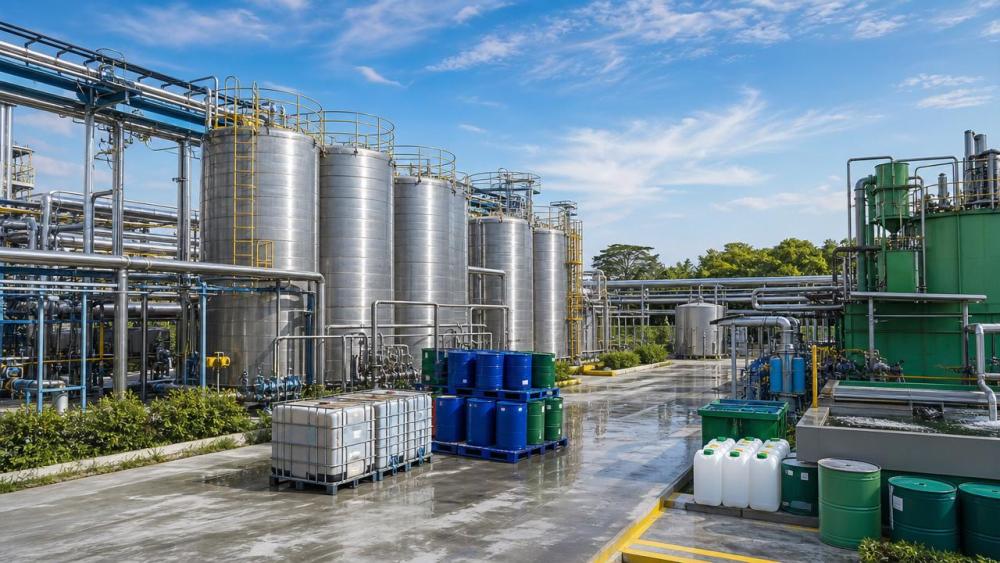
For distributors in basic chemicals, solvents, additives, agrochemicals, and water treatment inputs, sustainability has moved from the EHS department to the sales desk. Buyers no longer ask only about purity, price, and lead time. They also ask about carbon footprint, restricted substances, waste handling, packaging recovery, and documentation readiness.
This shift is especially visible across export-oriented manufacturing and modern agriculture. A solvent that performs well but raises regulatory concerns can block an order. A flame retardant with poor disclosure can delay customer approval. A fertilizer input with weak traceability can lose access to premium buyers.
In other words, chemical industry sustainability has become a commercial filter. It influences who gets shortlisted, who can defend margins, and who can scale into larger accounts.
- Distributors need faster answers to customer sustainability questionnaires and supplier audits.
- Agents need compliant product positioning across different regions and end-use sectors.
- Channel partners need alternatives when legacy chemistries face tighter restrictions or reputation pressure.
What has changed in buyer behavior?
Industrial buyers increasingly evaluate chemicals through a total-value lens. They compare not only unit cost, but also reformulation risk, waste treatment burden, certification effort, storage safety, and the likelihood of future restrictions. That makes sustainability a practical buying criterion, not a branding slogan.
Where distributors feel the pressure most across the chemical value chain
The pressure is not uniform. Each chemical segment faces different sustainability questions, and channel partners must prepare segment-specific answers. BCIA’s coverage across five core pillars helps distributors interpret these differences with greater precision.
The table below shows how chemical industry sustainability concerns vary by product group and why that matters during sales discussions.
For channel partners, the lesson is clear: a generic sustainability statement is not enough. Each product family needs a different sales argument, different documentation, and different risk framing.
Why BCIA’s intelligence model matters
BCIA connects molecular behavior, regulatory direction, and procurement economics. That matters because customers do not buy “green” chemistry in isolation. They buy performance under constraints: export rules, production uptime, crop response, wastewater discharge, and budget control.
Its focus on bulk materials, specialty solvents, polymer auxiliaries, agrochemical inputs, and water eco-chemicals enables more practical channel support. A distributor can evaluate not just what is compliant today, but what is likely to remain commercially viable tomorrow.
How to evaluate sustainable chemical products without hurting margin
Many channel businesses worry that chemical industry sustainability automatically means higher cost and lower competitiveness. In reality, the right evaluation method often protects margin by reducing hidden costs. The issue is not whether a product is labeled sustainable, but whether it performs better in the customer’s full operating context.
Five practical evaluation dimensions
- Regulatory durability: Check whether the formulation is exposed to tightening controls under frameworks such as REACH, EPA-related review paths, VOC limits, or local hazardous substance rules.
- Process compatibility: A greener alternative that requires major line changes may slow adoption. Confirm dosage, reaction behavior, stability, and storage conditions.
- Lifecycle cost: Include handling losses, disposal expense, energy use, and downtime risk, not just purchase price per ton or drum.
- Documentation quality: Strong SDS, technical data, composition disclosure boundaries, and application guidance shorten the customer approval cycle.
- Supply continuity: A sustainable product that cannot be delivered consistently will not survive in distribution. Source resilience remains a core sales factor.
The comparison below helps distributors balance commercial reality with sustainability positioning during product selection.
A sustainability-oriented option does not need to be the cheapest to become the strongest commercial choice. It needs to lower friction, reduce future risk, and support the customer’s own market access.
What procurement teams and channel partners should check before committing
A recurring problem in chemical distribution is incomplete pre-sale screening. Teams chase a promising alternative, only to discover missing compliance paperwork, unstable packaging standards, or poor application consistency. A disciplined checklist prevents this.
Pre-commitment checklist for sustainable chemical sourcing
- Confirm the intended end use: coatings, PU systems, crop inputs, electronics cleaning, wastewater treatment, or another regulated application.
- Request current technical documents and verify whether they match the destination market’s language and compliance expectations.
- Check whether the product’s sustainability value is measurable through lower dosage, safer handling, reduced emissions, lower residue, or less sludge.
- Validate pack sizes, storage conditions, and transport classification to avoid downstream logistics surprises.
- Assess whether the supplier can support formulation questions, customer trials, and substitution analysis when needed.
This is where BCIA’s Strategic Intelligence Center becomes commercially useful. Compliance tracking, molecular-level interpretation, and commodity-risk thinking help channel partners avoid narrow decisions based only on current spot pricing.
Common misconceptions about chemical industry sustainability
The market still carries several misconceptions that distort purchasing decisions. These misunderstandings can delay adoption of better products or push teams into weak substitutions.
Misconception 1: Sustainable chemistry always means premium pricing
Sometimes it does, but not always in total cost. Lower dosage, easier treatment, reduced rework, and smoother customer approval can outweigh a higher invoice price. In distribution, profitability often comes from fewer disruptions and stronger repeat sales.
Misconception 2: Compliance documents alone prove sustainability
Documents are necessary, but they do not tell the full story. A product may be formally compliant yet still create poor waste performance, difficult worker exposure conditions, or limited future viability. Commercial sustainability needs technical and operational validation.
Misconception 3: Only multinational buyers care
Mid-sized factories, regional formulators, and agricultural input resellers increasingly care too. They may not use the same vocabulary, but they ask for safer alternatives, longer-term compliance confidence, and lower hidden operating costs.
FAQ: practical questions distributors ask about chemical industry sustainability
How should I present chemical industry sustainability to price-sensitive customers?
Lead with business outcomes, not abstract environmental language. Show how the product may reduce treatment cost, lower reformulation risk, ease export approval, shorten customer audits, or stabilize long-term supply. Buyers respond better to operational logic than slogans.
Which sectors are most sensitive to sustainability-driven chemical selection?
Coatings, plastics, electronics cleaning, pharmaceuticals, agrochemical formulation, and water treatment are among the most sensitive sectors. These industries face strong pressure from regulatory review, end-customer specifications, workplace safety, and waste management costs.
What should I ask a supplier before representing a new sustainable product line?
Ask about documentation readiness, formulation boundaries, substitution recommendations, packaging options, regulatory status in target markets, trial support, and expected delivery continuity. Also ask what claims can be supported technically and what claims should not be used in customer-facing materials.
Can sustainable chemical products really improve pricing power?
Yes, when they solve a real commercial problem. If a product helps a buyer meet downstream brand requirements, export conditions, or wastewater limits, it becomes harder to compare on commodity price alone. That creates room for better margin protection.
What the next phase of the market means for distributors and agents
The next phase of chemical distribution will reward companies that combine compliance literacy, application understanding, and sourcing agility. The sales conversation is shifting from “Can you supply this chemical?” to “Can you help us keep this formulation commercially viable under changing environmental and supply constraints?”
That is why chemical industry sustainability is now a sales factor. It shapes buyer confidence, account retention, approval speed, and margin resilience. For channel partners, the opportunity is not simply to carry greener products. It is to build a smarter decision framework around them.
Why work with BCIA for sustainable chemical sourcing decisions
BCIA helps distributors, agents, and channel partners bridge three difficult gaps at once: molecular-level product understanding, cross-border compliance interpretation, and supply-chain cost judgment. That is especially valuable when customers need more than a catalog and a quote.
- If you need product selection support, BCIA can help compare basic chemicals, solvents, auxiliaries, agrochemical inputs, or water treatment chemistries against your target application and market constraints.
- If you need compliance direction, BCIA can help you clarify documentation priorities, restricted-substance concerns, and likely approval bottlenecks for export-oriented customers.
- If you need commercial guidance, BCIA can help you review supply continuity, contract timing, and substitution risk so sustainability does not undermine delivery performance.
You can reach out to discuss parameter confirmation, product screening, delivery cycle expectations, customer trial planning, certification-related questions, sample support, and quotation alignment. For distributors selling into manufacturing and agriculture, that kind of targeted support can turn chemical industry sustainability from a sales obstacle into a growth lever.
Recommended News