
Search
Category
Related Industries
- How supply disruptions reshape chemical sourcing decisions worldwideGlobal chemical supply chain disruptions are reshaping sourcing. Explore smarter strategies for risk, compliance, dual sourcing, and resilient procurement.
- How to assess zero-carbon chemical synthesis catalysts for scale-upZero-carbon chemical synthesis catalysts: assess scale-up readiness through lifecycle emissions, durability, reactor fit, energy use, safety, and product quality.
- How to use a global chemical regulations guide for market entryUse a global chemical regulations guide to identify compliance triggers, reduce market-entry risks, and build a faster path to confident international chemical sales.
Weekly Insights
Stay ahead with our curated technology reports delivered every Monday.
Plastic Sheet Extrusion Line for Sale: Cost and Inspection Points




Byline: Editorial Desk, OLES Industrial Materials Review
Review Note: Prepared for buyers comparing plastic sheet extrusion lines, second-hand machinery, control systems and production risk.
A plastic sheet extrusion line for sale can look simple on a machine list: extruder, die, three-roll calender or cooling rolls, haul-off, trimming, cutting and stacking. In practice, the buying decision is more complicated. The line has to match the resin, sheet width, thickness, surface requirement, output target, available power, plant layout and maintenance capability of the buyer. A used line can be a good investment, but only when the cost and inspection work are handled with discipline.
This guide explains how buyers should evaluate cost and inspection points before purchasing a plastic sheet extrusion line, especially for PP, PE, ABS, PS and HDPE sheet production. It also covers control-system details that are easy to overlook, including pressure sensing and temperature stability. A buyer searching in Polish for czujnik ciśnienia w wytłaczarce, meaning a pressure sensor in an extruder, is already thinking in the right direction: small instrumentation details can decide whether a used extrusion line can be run safely and consistently.
For buyers comparing used and rebuilt equipment, Machinery Reborn provides a useful reference point for second-hand plastic sheet extrusion machinery and related buying questions. The final purchase decision should still be based on documented machine condition, product fit and a realistic installation plan.
What Really Drives the Cost?
The purchase price is only one part of the cost. Buyers often compare two offers by the listed machine price, then discover later that one line needs a new screw, rewired electrical cabinet, repaired die lip, roll polishing, new heaters, extra spare parts or more expensive installation work. A fair comparison should include the total cost to reach stable production, not only the cost to load the equipment into a container.
Cost usually starts with the machine condition. A line dismantled from a working factory may be cheaper than a rebuilt line, but it may also require more local work. A rebuilt line may cost more at purchase, but it can reduce commissioning risk if the seller documents what was replaced and tested. The buyer should ask whether the offer includes inspection, trial running, electrical updates, spare heaters, screw and barrel measurement, die cleaning, loading, packing and installation guidance.
Material range also affects cost. A line used only for narrow PP sheet may not be enough for thick HDPE sheet. ABS sheet can expose melt instability and surface problems. PS sheet can require tighter cooling and winding control. If the buyer plans to run multiple materials, the cost may include tooling changes, different screw design, temperature-control upgrades or extra downstream equipment.
Cost Categories Buyers Should Budget
Start the Inspection With the Product Requirement
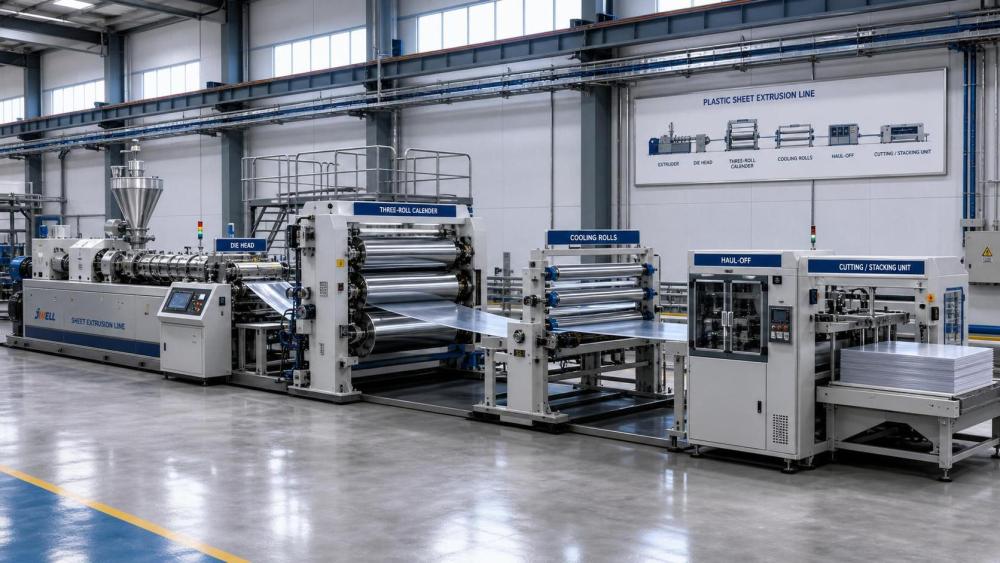
A machine inspection should begin with a written product requirement. The buyer should define material, sheet width, thickness range, surface finish, output per hour, acceptable thickness tolerance and downstream use. Without these details, even a thorough machine inspection may answer the wrong question. A line that is acceptable for one sheet product may be unsuitable for another.
For PP and PE sheet, buyers should pay attention to melt stability, cooling, line speed and trimming. For ABS sheet, surface quality and temperature control often deserve extra attention. For PS sheet, brittleness and cooling conditions can affect product handling. For HDPE T-grip or structured sheet, die condition, forming accuracy and pulling stability become more important. The equipment should be checked against the product, not against a generic idea of sheet extrusion.
Buyers should ask the seller for the original product history of the line. What material did it run? What sheet width and thickness were common? Was the line used with virgin resin, recycled material, filler or color masterbatch? Did the previous owner run it continuously or occasionally? These questions can reveal likely wear points before the buyer spends money on travel, dismantling or shipment.
Mechanical Inspection Points
The screw and barrel need careful attention. Wear can reduce output, create unstable pressure, increase melt-temperature variation and make sheet thickness harder to control. If possible, request measurement records or ask for inspection by a technician who can evaluate screw flight clearance and barrel condition. A shiny outside frame tells very little about the condition inside the extruder.
The die should be inspected for lip damage, leakage, corrosion, scratches and uneven adjustment. Sheet extrusion depends heavily on die condition. A damaged die may cause streaks, uneven edge quality or thickness variation across the sheet width. For a used line, die cleaning and inspection should be treated as a major cost item if the seller cannot prove its condition.
The cooling rolls or calender section should be checked for surface marks, temperature channels, bearing condition, pressure control and roll alignment. Poor cooling-roll condition can create sheet waviness, internal stress or surface defects. The haul-off and cutter should also be checked for speed synchronization, roller wear, tracking and cutting accuracy. A line can have a good extruder but still fail to produce saleable sheet if the downstream section is unstable.
Electrical and Sensor Checks
Electrical condition is one of the most common hidden cost areas in used machinery. Buyers should ask for photos of the inside of the control cabinet, not only the front panel. PLC brand, inverter model, wiring condition, heater control, motor protection and safety circuits should be reviewed. If key components are obsolete, the buyer needs to budget for replacement or accept longer downtime when faults occur.
Pressure sensing deserves particular attention. A melt pressure sensor helps operators understand die pressure, filter condition, material behavior and process stability. The Polish query czujnik ciśnienia w wytłaczarce points to this exact concern. If the pressure sensor is missing, damaged or incompatible with the control system, the buyer may lose an important process signal. That does not always stop production, but it can increase the risk of running blind during startup or material changes.
Temperature sensors should also be checked. Unstable temperature readings can lead to poor melt quality, surface defects and operator confusion. A used line with old thermocouples, damaged heater bands or poor wiring may require more electrical work than expected. Buyers should ask whether sensors were tested during trial running and whether replacement parts are included in the offer.
Trial Run and Video Evidence
A trial run is the best evidence when the line is still assembled. Buyers should not only ask whether the line can run; they should ask what material was used, what thickness was produced, how long the trial lasted, and whether the output was stable. A short no-load video is better than nothing, but it does not prove sheet quality. A loaded trial with sheet production is more useful.
During trial review, watch for melt pressure fluctuation, motor load, gearbox noise, roll temperature, sheet edge behavior, surface quality and cutting stability. Ask the seller to show the control panel during operation. If the machine uses a pressure sensor, check whether the reading is stable and whether operators understand what it means. If the sensor reading is absent or erratic, the buyer should investigate before shipment.
If a trial run is not possible, buyers should increase documentation requirements. Ask for recent running records, maintenance history, photos before dismantling, and detailed images of the screw, barrel, die and electrical cabinet. When the seller cannot provide evidence, the buyer should price the line as higher risk.
Inspection Checklist Before Payment
- Confirm material type, sheet width, thickness range and target output.
- Request screw and barrel condition information, not only extruder size.
- Inspect die lip, adjustment bolts, leakage marks and usable width.
- Check cooling-roll surface, temperature control and bearing condition.
- Review haul-off, trimming, cutting and stacking systems for synchronization.
- Ask for control cabinet photos showing PLC, inverter, wiring and safety devices.
- Confirm melt pressure sensor condition, signal compatibility and replacement options.
- Separate included refurbishment work from optional paid work.
- Ask how the line will be dismantled, marked, packed and loaded.
- Prepare budget for local installation, wiring, trial material and spare parts.
How to Compare Two Offers
When two used plastic sheet extrusion lines are offered at different prices, buyers should compare them by production readiness. A cheaper line may be attractive if the buyer has a strong maintenance team and enough time to rebuild locally. A more expensive line may be better if it includes documented refurbishment, tested controls, careful packing and installation support. The right choice depends on the buyer's internal capability.
A simple comparison sheet can help. List machine price, known repairs, unknown risks, missing parts, electrical work, shipment, installation, expected startup time and spare-part availability. Give more weight to verified facts than to verbal assurances. If one seller provides photos, test records and clear repair scope while another provides only a short machine list, the first offer may carry lower operational risk even at a higher price.
Buyers should also compare communication quality. Used machinery projects often require many small decisions after payment: packing method, cable marking, spare parts, loading sequence, installation references and startup questions. A seller who answers technical questions clearly before payment is more likely to support the buyer after payment.
FAQ
What is the most important inspection point on a plastic sheet extrusion line?
The screw, barrel, die and cooling section are usually the most important mechanical areas. Electrical controls and sensors are also important because they affect safe and stable operation.
Why does the pressure sensor matter?
The pressure sensor helps operators monitor melt pressure and process stability. A missing or unreliable sensor can make startup, filter changes and material changes more difficult to manage.
Can a used line run PP, PE, ABS and PS without changes?
Not always. Multi-material use depends on screw design, barrel condition, die, temperature control and downstream cooling. Buyers should verify the intended product range before purchase.
Should buyers always request a trial run?
Yes, when the line is assembled and power is available. If a trial is impossible, buyers should request more inspection evidence and budget for additional startup risk.
What should be clarified before paying a deposit?
Clarify included equipment, repair scope, missing parts, packing responsibility, delivery condition, installation support and whether any sensor or control-system work is required.
Final Advice
A plastic sheet extrusion line for sale should be evaluated as a production system, not a single machine. Cost is shaped by mechanical condition, electrical condition, tooling fit, logistics and the buyer's own technical resources. The safest purchase process starts with the product requirement, continues through component-level inspection, and ends with a written understanding of what is included before shipment.
For second-hand sheet extrusion equipment, the best deal is rarely the lowest listed price. It is the line that can be inspected honestly, repaired within a known scope, shipped without confusion and started with manageable risk. Buyers who treat sensors, controls, dies and downstream equipment as part of the cost picture will make better decisions than buyers who compare offers by extruder diameter and price alone.
Recommended News