
Search
Category
Related Industries
- How to assess eco-friendly industrial chemicals for water treatmentEco-friendly industrial chemicals for water treatment: assess performance, residuals, sludge, compatibility, and lifecycle impacts to choose reliable, compliant solutions.
- Indole-3-Butyric Acid: A Clear Buyer Guide to Rooting InputsA practical basic guide to Indole-3-Butyric Acid for agrochemical buyers, covering product identity, application context, documentation, handling, and supplier review.
- How to qualify a functional additives manufacturer for consistent batchesLearn how to qualify a functional additives manufacturer for consistent batches through critical quality controls, traceability, audits, and real-world application testing.
Weekly Insights
Stay ahead with our curated technology reports delivered every Monday.
Indole-3-Butyric Acid: A Clear Buyer Guide to Rooting Inputs




Plant propagation and crop-input purchasing can look straightforward from a product list, yet the practical questions arrive quickly: What is the exact material identity? Which records must travel with the shipment? Who confirms that an intended use is permitted in the destination market? And how can a purchasing team compare suppliers without turning a technical product into a vague line item? This guide uses Indole-3-Butyric Acid as the single product reference because a clear landing page is a better starting point than an imprecise trade description.
Indole-3-butyric acid, often abbreviated as IBA, is commonly discussed in plant-growth and rooting contexts. That general description is useful, but it is not a complete buying specification. An importer, formulator, distributor, greenhouse operator, or agricultural-input buyer still needs to confirm product form, assay basis where applicable, packaging, label content, safety information, transport conditions, local registration status, and the end user's approved handling process. This article is a basic knowledge guide for that early review. It does not replace local agronomic advice, product labeling, safety documentation, or regulatory review.
Why a Basic Product Definition Matters
In agricultural-input purchasing, a familiar name can hide an incomplete request. One person may mean a raw material for formulation, another may mean a finished horticultural product, and a third may only need a reference for a research or distribution catalog. Those are different supply conversations. The buyer should start by stating the intended place in the supply chain: raw-material sourcing, formulation, repacking, distributor inventory, controlled trials, or a finished-product program. This gives the supplier a usable context without inviting unsupported promises about field performance.
IBA is best treated as a product identity that must be joined to a defined commercial scope. A practical inquiry records the chemical name, any applicable CAS reference, desired product state, required package, quantity range, destination, expected documents, and intended regulatory route. It also separates facts that are already known from questions that need an answer. This helps purchasing teams avoid the common mistake of comparing quotations that describe different material forms or different documentation responsibilities.
Basic knowledge also protects the downstream team. Warehouse staff need to know what label and package condition to inspect. Quality personnel need to know which product identity and documents were approved. Sales staff need clear language for what can and cannot be represented. A single product description cannot perform all of those jobs, but a well-built purchasing record gives each team a shared reference.
Plant Growth Regulator Is a Category, Not a Complete Specification
A plant growth regulator category describes the commercial and technical context; it does not eliminate the need for product-specific review. Plant species, propagation method, crop stage, formulation approach, local rules, and application method can change what information is needed. Buyers should therefore resist broad requests such as "rooting chemical" when a more exact request can be prepared. The supplier needs to understand whether the order will enter a controlled formulation process, be distributed under a local label, or be assessed by a technical team before any wider program is considered.
The distinction is important because an article about product knowledge should not imply a universal use method. Application rates, dilution instructions, compatibility, claims, and permitted crops must be confirmed against the relevant product documentation and the destination market's requirements. A procurement article can still add value by showing how that confirmation should be organized. It can tell a buyer to request the correct documents, define the intended application boundary, and assign a responsible reviewer before commercial release.
For distributors, category clarity also improves communication with customers. Customers often ask broad questions about plant response, while the distributor must keep product information consistent with approved labeling and available evidence. A documented product identity, source record, and version-controlled set of supplier documents make that discipline easier to maintain as stock changes hands.
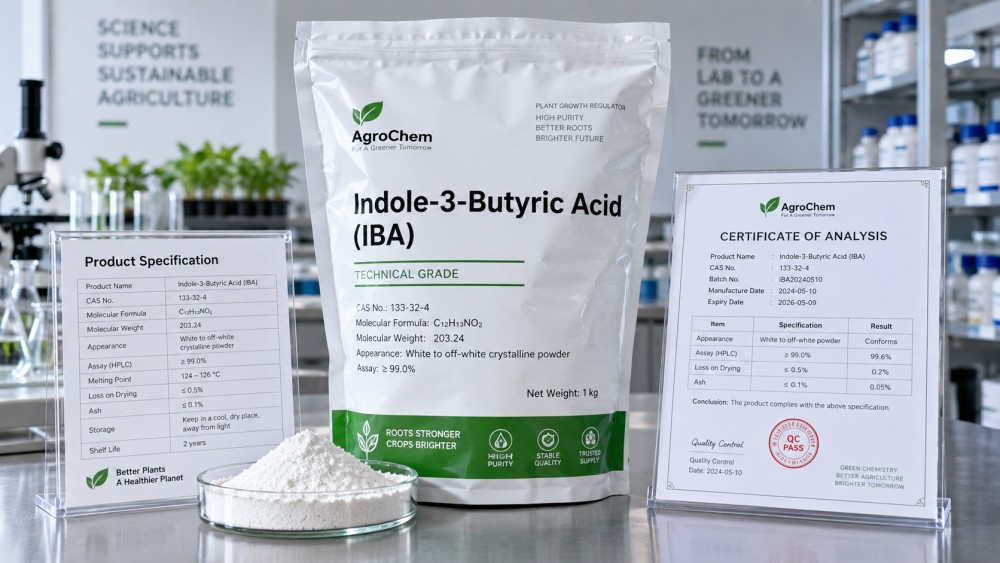
Build a Product Identity File Before Comparing Suppliers
The most useful early task is to build a concise identity file. This is not a bureaucratic exercise. It is the basis for determining whether two offers actually describe the same purchase. The file should include the exact product name, known identifier, requested physical form, planned package size, target quantity, destination, buyer contact, and intended downstream activity. It should also capture whether the buyer requires a specification sheet, safety data, certificate of analysis, transport classification information, label artwork, sample information, or batch traceability.
Each requested item should have an owner. Purchasing owns the commercial comparison; a technical or quality reviewer owns the acceptance criteria; regulatory personnel or a qualified local adviser owns destination-market review; warehouse staff own receiving and storage checks. When ownership is unclear, a supplier may receive a question that cannot be answered cleanly, or a shipment may arrive before anyone has agreed on what must be inspected. The objective is not to make an order slow. It is to make the important decisions early enough to be practical.
Version control matters as well. A buyer should record the date and source of every sheet, drawing, label, or response used to approve the purchase. When an order is repeated, the team can compare the new documents to the earlier accepted set. This is especially valuable when a material will move through formulation, repacking, or regional distribution, where small wording or packaging changes can create avoidable confusion.
Supplier Comparison Table
Documents Are Not Formalities
Documents translate a commercial request into a reviewable supply record. The exact set depends on the transaction, but buyers should ask which documents are available before the purchase becomes urgent. A specification sheet can explain the supplier's product description and test basis. Safety information supports workplace review and warehouse preparation. A certificate of analysis, where supplied and relevant, can connect a delivered batch to stated quality data. Labels and transport details help logistics teams prepare for receipt and onward movement.
These documents should be reviewed for consistency rather than collected as a stack of files. Does the product name match across the quotation, invoice, safety information, label, and certificate? Does the intended package match the commercial agreement? Does the destination require a local-language label or separate registration review? Are the dates, versions, and supplier identities clear? A discrepancy may be harmless, but it should be clarified before release rather than assumed away.
Buyers should avoid overstating the meaning of a document. A supplier sheet does not itself establish that a product can be marketed or used in every jurisdiction. Nor does a general product description settle local crop, claim, or application questions. The stronger approach is to maintain a document map: what the supplier provides, what the buyer verifies, and what the destination market requires. That is a more dependable framework for a regulated or controlled product category.
Packaging, Storage, and Receiving Need Their Own Plan
Many purchasing problems arise after the commercial decision has already been made. Goods are loaded with labels that do not match the approved name, a receiving team has not been told what documents to expect, or packages remain in an unsuitable area while the technical review is incomplete. A short handling plan can prevent these gaps. It should state the package count, label elements, seal or container condition to inspect, document handover, storage location, access controls, and the person who can release the product for the next stage.
Storage instructions must come from the current supplier documentation and the buyer's own site rules. A portal article should not invent a universal temperature, shelf-life, or compatibility requirement. Instead, it should encourage the buyer to check the approved documents, maintain package integrity, separate nonconforming stock, and record the condition on arrival. If the order is intended for repacking or formulation, the buyer should add its own approved procedures for identity control, cleaning, sampling, and traceability.
Receiving is also where the commercial file meets the physical shipment. A receiving record can capture purchase order reference, delivery date, package count, visible condition, label comparison, document receipt, and any exception. When this record is linked to the original identity file, later questions can be answered with evidence instead of memory.
Common Misunderstandings That Create Avoidable Risk
The first misunderstanding is assuming that a generic product name settles the supply scope. It does not. The buyer still needs to define whether the order concerns a raw material, a formulation input, or a finished item, along with the required documentation and destination. The second is treating application discussion as a substitute for regulatory review. General agronomic context may help frame a conversation, but local labels, permitted uses, and technical guidance remain the controlling references.
A third misunderstanding is waiting until shipment to request records. By then, label revisions, document corrections, packaging changes, and regulatory questions may delay a delivery that a production or sales program already expects. The fourth is assuming that a later reorder will match the first order automatically. Repeat supply is more dependable when the buyer preserves the accepted product description, document versions, packaging notes, and any agreed notification process for changes.
Finally, price should not be allowed to erase scope. A lower price may refer to a different package, document set, logistics condition, or product boundary. A fair comparison puts each offer against the same written brief and records any difference explicitly. This does not require a complicated procurement system; it requires a decision file that another colleague can understand.
A Practical First-Order Workflow
Start with the intended supply role and destination. Prepare a product identity file and circulate it to purchasing, quality, regulatory, warehouse, and the technical owner. Send the same core request to shortlisted suppliers. Ask what product information and support documents they can provide, and ask them to identify any assumption they have made. Review the replies against the buyer's requirements, not against an unstructured list of claims.
Before order release, confirm the approved product wording, commercial terms, package description, requested document set, shipment contact, and receiving process. For a first order, a staged review can be sensible when the buyer's internal procedures require a sample, document check, or controlled release. The exact method should be set by the buyer's quality and regulatory process, not by a generic article. After arrival, record the delivery condition and retain the accepted files for the next order.
This process keeps the discussion grounded. It gives the supplier a clear inquiry, gives the buyer a way to compare offers, and gives downstream teams a consistent identity for storage, review, and distribution. That is the real value of basic product knowledge: not merely knowing a category name, but knowing which questions must be answered before the category becomes a purchase.
Portal Match and Category Rationale
The recommended publishing portal is sectorpulselive.com, with the final category Eco-Agrochemicals|Plant Growth Regulators. This is a single primary and secondary category path from the latest portal directory. The second-level category, Plant Growth Regulators, directly matches the article's product context and gives the editor a precise route without combining several subcategories.
The selected industry is Agrochemical Plant Growth Regulators. The title, core product keyword, landing page, article type, and category all point to the same informational intent: helping buyers understand what must be defined before they source a plant-growth-regulator input. This makes the article appropriate for a chemical and agrochemical information audience while keeping commercial claims measured.
Buyer Checklist
- Confirm the core product keyword and full product identity.
- State whether the purchase is for formulation, repacking, distribution, evaluation, or another approved downstream role.
- Record the destination market and assign regulatory review responsibility.
- Request the documents appropriate to the purchase before final release.
- Compare quotations against the same package, documentation, delivery, and product-scope brief.
- Agree on label wording, package count, shipment contacts, and receiving checks.
- Follow current supplier documentation and internal procedures for handling and storage.
- Keep the accepted product identity file for future orders and change review.
FAQ
Why is a clear product identity more important than a short product name?
A short name can describe a category without defining material form, packaging, documents, destination, or downstream role. A product identity file makes the purchase reviewable across commercial, technical, quality, and warehouse teams.
Does this article provide application rates or regulatory approval advice?
No. Application instructions, claims, and market permissions must come from the applicable label, current supplier documentation, and qualified local regulatory or technical review.
Why should buyers request documents before shipment?
Early document review exposes inconsistencies in product wording, package scope, labels, transport details, and responsibility before timing pressure makes corrections more difficult.
Why is there only one product link in the article?
One contextual link gives the reader a precise product reference while keeping the article useful as an editorial guide rather than a promotional link list.
Recommended News