
Search
Category
Related Industries
- How supply disruptions reshape chemical sourcing decisions worldwideGlobal chemical supply chain disruptions are reshaping sourcing. Explore smarter strategies for risk, compliance, dual sourcing, and resilient procurement.
- How to assess zero-carbon chemical synthesis catalysts for scale-upZero-carbon chemical synthesis catalysts: assess scale-up readiness through lifecycle emissions, durability, reactor fit, energy use, safety, and product quality.
- How to use a global chemical regulations guide for market entryUse a global chemical regulations guide to identify compliance triggers, reduce market-entry risks, and build a faster path to confident international chemical sales.
Weekly Insights
Stay ahead with our curated technology reports delivered every Monday.
Water Eco-Chemicals for Lower RO Fouling




For after-sales maintenance teams, reducing RO fouling is not only a maintenance target. It directly affects uptime, permeate quality, membrane life, cleaning frequency, and total operating cost.
Well-selected water eco-chemicals help stabilize pretreatment, limit scale growth, suppress biofilm formation, and keep differential pressure under control in demanding industrial water systems.
In integrated industries, RO systems often face mixed feed variability. That makes eco-compliant chemistry a practical tool for faster response, safer operation, and lower fouling risk.
Understanding RO Fouling and the Role of Water Eco-Chemicals
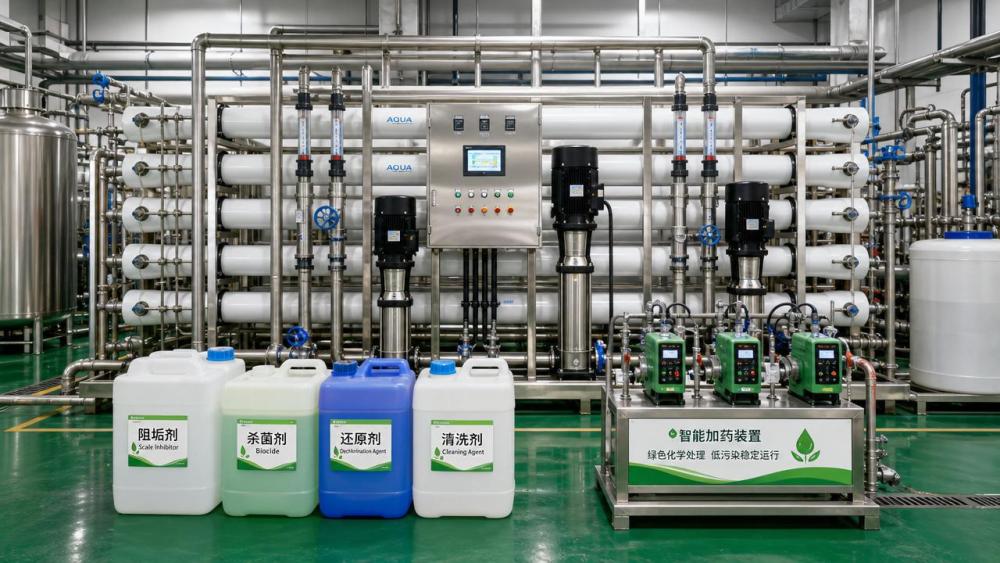
RO fouling is the accumulation of unwanted material on membrane surfaces or inside flow channels. It reduces flux, raises pressure, and weakens salt rejection over time.
The main fouling forms are mineral scaling, colloidal plugging, organic deposition, and biological growth. Each type requires different control strategies and monitoring signals.
Water eco-chemicals are treatment chemistries designed to control these risks with stronger environmental compatibility. They support compliance goals without sacrificing operational performance.
Typical examples include RO antiscalants, non-oxidizing biocides, dispersants, membrane cleaners, coagulant aids, and biofilm control agents with lower ecological burden.
At BCIA, water treatment intelligence connects chemical mechanism, compliance pressure, and supply economics. That perspective is important when selecting water eco-chemicals for stable, long-cycle RO operation.
Why fouling develops quickly
- Feedwater chemistry changes with season, source blending, or upstream process shifts.
- Pretreatment may remove solids but leave dissolved scale precursors.
- Low crossflow velocity allows deposits to stay on membrane surfaces.
- Improper chemical dosing can worsen fouling instead of preventing it.
Current Industry Signals Shaping Chemical Choices
Across comprehensive industrial sectors, RO systems are handling more difficult water. Reuse targets, discharge pressure, and cost control are pushing membrane units closer to operating limits.
This raises attention on water eco-chemicals that balance membrane protection, environmental acceptability, and compatibility with existing dosing and cleaning programs.
These trends make chemistry selection less about a single product. It becomes a system decision tied to water analysis, membrane type, compliance standards, and service strategy.
Practical Value of Water Eco-Chemicals in RO Maintenance
The strongest value of water eco-chemicals is preventive control. Preventing deposits is cheaper and safer than restoring a heavily fouled membrane train.
For scaling, antiscalants delay crystal nucleation and distort growth patterns. This keeps calcium carbonate, sulfate salts, silica, and metal complexes from hardening on membrane surfaces.
For colloidal fouling, dispersants reduce particle agglomeration. Better suspension means less channel blockage, lower pressure rise, and improved cleaning response.
For biofouling, compatible biocontrol chemistry helps suppress microbial attachment and slime formation. That protects flux stability and reduces sudden differential pressure spikes.
For organic fouling, cleaner formulations with wetting and solubilizing functions help remove oils, natural organic matter, and process residues before permanent damage occurs.
Operational benefits commonly observed
- Longer intervals between clean-in-place events
- Lower normalized pressure increase
- More stable permeate conductivity
- Reduced chemical overuse and waste generation
- Better alignment with eco-compliance objectives
Because BCIA tracks both formulation barriers and regulatory thresholds, it highlights a key point. Effective water eco-chemicals must work technically and remain acceptable in broader environmental review.
Typical RO Fouling Scenarios and Suitable Chemical Approaches
Not every fouling event looks the same. Matching the chemical approach to the fouling signature improves treatment efficiency and avoids unnecessary interventions.
This scenario-based approach helps identify whether the right answer is prevention, cleaning, or a combined program. It also supports better root-cause correction.
Selection Criteria for Eco-Compliant Chemical Programs
Choosing water eco-chemicals should start with feedwater data and membrane operating history. Product labels alone rarely predict real performance in complex industrial conditions.
Core selection points
- Check compatibility with membrane material and existing pretreatment chemistry.
- Review scaling tendency using recovery, temperature, pH, and ionic balance.
- Prefer products with documented environmental and regulatory acceptance.
- Compare active content, dosing window, and expected cleaning efficiency.
- Validate through field trials and normalized performance trending.
It is also important to connect chemistry with supply reliability. A strong program fails if dosing products change frequently or replacement grades shift performance unpredictably.
That is where BCIA’s intelligence model matters. It links formula performance, compliance scrutiny, and procurement volatility across the broader chemical value chain.
Implementation Advice for Lower RO Fouling
Good chemicals alone do not solve fouling. Results improve when dosing accuracy, monitoring discipline, and cleaning practice are aligned with membrane operating limits.
Recommended practice steps
- Trend normalized permeate flow, salt rejection, and differential pressure weekly.
- Audit antiscalant dosing pumps, calibration, and storage conditions regularly.
- Verify pretreatment stability, especially SDI, turbidity, and residual oxidant control.
- Use membrane autopsy or foulant analysis after recurring unexplained decline.
- Match cleaning pH, temperature, and circulation time to the foulant type.
Avoid overfeeding chemistry in response to every performance change. Excess product can increase organic loading, interact with pretreatment aids, or create misleading operating conclusions.
A disciplined review cycle is more effective. Compare water analysis, membrane data, and chemical dosage before adjusting the program.
Next-Step Focus for More Reliable RO Performance
Lower RO fouling comes from combining diagnosis, prevention, and eco-compliant chemistry. Water eco-chemicals provide the practical bridge between membrane protection and environmental responsibility.
A useful next step is to review current fouling patterns, cleaning records, and feed variability. Then align those findings with a targeted water eco-chemicals program.
BCIA supports this process by connecting technical understanding with chemical market intelligence. That helps strengthen treatment decisions, compliance readiness, and long-term operational resilience.
For systems under scaling pressure, unstable biofouling, or rising service cost, refining the chemical strategy is often the fastest route to lower RO fouling.
Recommended News