
Search
Category
Related Industries
- Vietnam Enacts Dual-List Rule for Pesticide TechnicalsVietnam Enacts Dual-List Rule for Pesticide Technicals: New mandatory prohibited ingredient list & full auxiliary disclosure effective May 1, 2026 — act now to avoid import suspension.
- China's National Carbon Market Exceeds $500M; Chemical Additives Sector Faces Inclusion DeadlineChemical additives sector faces urgent carbon compliance: China's national carbon market exceeds $500M as EU buyers demand PAS 2050/GHG Protocol footprint reports—act now to secure orders.
- New Coal Law Designates Coal as 'Strategic National Pillar'New Coal Law designates coal as 'strategic national pillar'—key implications for halogen-based flame retardant producers, importers & supply chain partners.
Weekly Insights
Stay ahead with our curated technology reports delivered every Monday.
Polymer Stabilizers: When Higher Cost Pays Off




For finance approvers, polymer stabilizers can look like a premium line item—until the true cost of discoloration, brittleness, warranty claims, and process instability appears on the P&L. In many applications, paying more for the right stabilization package is not a chemical luxury but a disciplined risk-control decision that protects product life, compliance, and total lifecycle profitability.
Why do higher-cost polymer stabilizers sometimes deliver better financial outcomes?
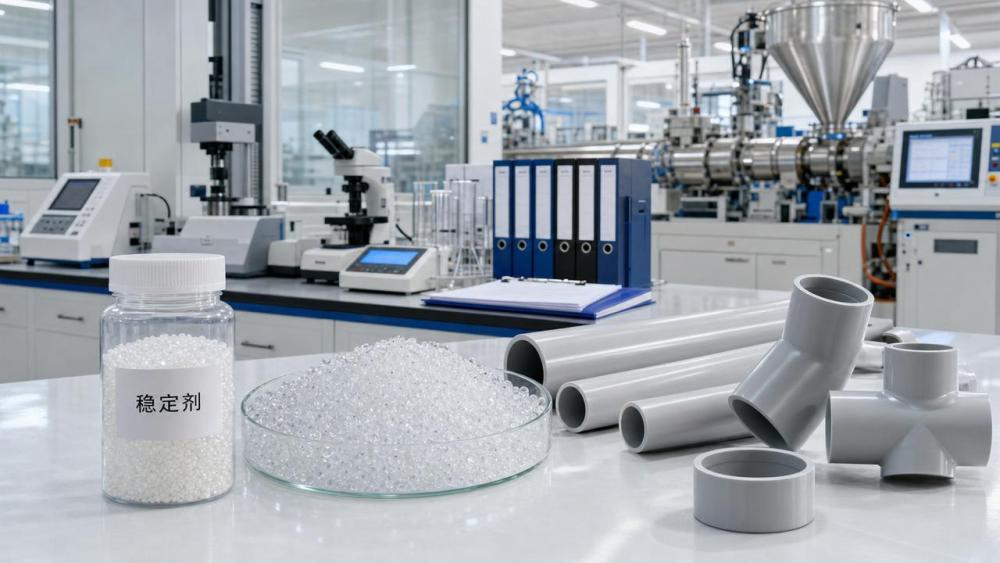
In procurement reviews, polymer stabilizers are often evaluated as additives measured in small dosage and visible unit cost. That narrow view can mislead financial teams. A stabilization package affects scrap rate, machine uptime, export compliance, shelf life, and product returns.
For manufacturers using plastics, coatings, elastomers, films, pipes, molded parts, agrochemical packaging, or water-treatment component housings, polymer stabilizers directly influence whether the final article survives heat, UV exposure, oxidation, and repeated processing.
BCIA tracks this issue across the broader chemical value chain. A stabilizer decision is rarely isolated. It links resin selection, solvent exposure, flame-retardant interaction, downstream compliance, and supply-chain cost control. That cross-market perspective matters when finance teams must approve a premium formulation.
- A low-priced stabilizer may reduce invoice cost but increase yellowing, gels, black specks, odor, or viscosity drift.
- A better stabilization package can lower conversion losses, reduce customer complaints, and extend commercial acceptance in export markets.
- For finance approvers, the right benchmark is not additive price per kilogram, but cost per saleable ton and cost per qualified service year.
What polymer stabilizers are protecting against
Most polymers degrade through heat, oxygen, light, shear, residual catalyst, or contamination. During extrusion, molding, storage, and end use, chain scission or uncontrolled crosslinking can weaken strength, alter color, and shorten service life.
Common polymer stabilizers include antioxidants, light stabilizers, UV absorbers, heat stabilizers, and processing stabilizers. In many industrial formulations, the value comes from synergy rather than a single additive. A balanced package often outperforms a cheaper one-component substitute.
Where finance teams usually underestimate stabilizer risk
The largest financial losses are often indirect. They appear later as margin erosion rather than as a rejected purchase order. This is why polymer stabilizers deserve evaluation at plant level, customer level, and compliance level.
The table below summarizes where a cheaper stabilizer package can create hidden operating cost. It is useful when comparing supplier quotations beyond nominal additive pricing.
For a finance approver, this table changes the conversation. The real decision is whether the selected polymer stabilizers reduce total business volatility enough to justify the premium. In many applications, they do.
Typical hidden losses that do not appear in additive quotations
- Customer-specific qualification delays when samples fail accelerated aging tests.
- Extra technical labor spent troubleshooting color drift or mechanical failure.
- Shorter production campaigns because deposits or instability force more frequent changeovers.
- Lower pricing power because buyers perceive the product as inconsistent.
How should polymer stabilizers be compared for approval, not just for purchase?
A disciplined approval framework helps finance teams avoid being trapped by headline price. BCIA recommends comparing polymer stabilizers against the application environment, resin family, process temperature, expected lifetime, and compliance destination.
The following selection table supports practical screening. It does not replace lab validation, but it gives procurement and finance stakeholders a common language for evaluation.
When suppliers are screened this way, a more expensive stabilizer package may reveal a lower risk-adjusted ownership cost. That is the point finance teams should capture in approval memos and sourcing reviews.
A practical approval checklist
- Define the failure mode first: yellowing, cracking, viscosity drift, odor, haze, or outdoor aging.
- Ask for dosage range, not only product name, because economics depend on treatment level.
- Review processing temperature and residence time. Some polymer stabilizers are effective only within specific thermal windows.
- Check interaction with the full formulation, especially if flame retardants, recycled content, pigments, or metal residues are present.
- Require documentation aligned with the destination market before final approval.
Which application scenarios justify premium polymer stabilizers most clearly?
Not every application needs a top-tier package. Finance discipline means paying for performance only where the economic return is visible. The strongest case for higher-cost polymer stabilizers appears in applications where failure is expensive, visible, regulated, or hard to repair.
High-value and high-risk scenarios
- Outdoor plastics exposed to UV, heat, and moisture, such as infrastructure components, agricultural films, or external housings.
- Repeatedly processed materials, including regrind-containing compounds and recycled polymer blends that are more sensitive to thermal oxidation.
- Appearance-critical products where color stability, gloss retention, or clarity drive customer acceptance.
- Export-oriented applications where documentation quality and additive compliance affect customs clearance and buyer approval.
- Products in contact with aggressive process environments, including solvents, cleaning agents, or elevated temperatures.
Where a standard package may be sufficient
Short-life, non-critical indoor components with low thermal history may not justify premium polymer stabilizers. In these cases, the best decision may be a balanced, compliant package with acceptable processing stability rather than maximum aging performance.
The key is segmentation. BCIA’s cross-sector intelligence is useful here because additive value changes sharply by resin system, use condition, and destination market.
How do cost, alternatives, and supply-chain strategy affect the decision?
Finance approvers should not treat polymer stabilizers as a binary choice between cheap and expensive. Better decisions come from evaluating alternatives: higher dosage of a lower-grade additive, resin upgrade, process changes, barrier layers, shorter warranty periods, or a premium stabilizer package.
The comparison below helps estimate which route usually makes sense from a cost-control and risk perspective.
This is where BCIA’s intelligence model matters. Because additives are linked to solvents, base chemicals, regulatory pathways, and procurement cycles, the best answer may include sourcing strategy as much as formulation strategy. Timing, supplier documentation strength, and raw-material volatility can change the economic ranking of each option.
Questions finance teams should ask suppliers
- What failure mode was the stabilizer package designed to control, and under what processing conditions?
- What is the recommended dosage range and what happens outside that range?
- How does the package perform with recycled content, pigments, flame retardants, or residual catalyst contamination?
- What supporting documents are available for destination-market compliance review?
- Can the supplier support sample validation, aging comparison, and delivery planning?
What compliance and documentation issues should not be ignored?
Even strong-performing polymer stabilizers can become poor commercial choices if documentation is weak. For export-oriented manufacturers, substance transparency, regional chemical regulatory alignment, and product safety communication are not administrative details. They are approval gates.
Depending on the market and end use, companies may need to review general frameworks such as REACH-related obligations, safety data communication, restricted-substance expectations from downstream customers, and application-specific product standards. The exact requirement depends on geography and product category.
Why this matters for finance
A noncompliant or poorly documented additive can create inventory lockup, emergency reformulation, missed delivery windows, and costly customer audits. These risks often exceed the savings gained from choosing lower-cost polymer stabilizers.
FAQ: practical questions finance approvers ask about polymer stabilizers
How do I know when premium polymer stabilizers are worth approving?
Approve the premium when the product faces heat, UV, multiple processing cycles, export compliance review, or visible appearance requirements. The stronger the downstream penalty for failure, the more likely the premium is justified.
Are polymer stabilizers mainly a technical issue, or a financial issue too?
They are both. Technically, they preserve polymer integrity. Financially, they protect yield, warranty exposure, customer retention, and market access. For many producers, polymer stabilizers are a margin-protection tool, not just a formulation detail.
Can lower-cost alternatives work if dosage is increased?
Sometimes, but not reliably. Higher dosage can raise cost, introduce processing side effects, or fail under outdoor or long-term aging conditions. Validation should compare full-life performance, not only initial pass results.
What is the biggest mistake in stabilizer procurement?
The most common mistake is buying polymer stabilizers on price per kilogram without linking them to scrap reduction, service life, or compliance risk. That approach rewards apparent savings while hiding later losses.
Why choose BCIA for polymer stabilizers intelligence and sourcing decisions?
BCIA works from a full-chain view of industrial chemistry. That means polymer stabilizers are assessed not as isolated additives, but in connection with base chemicals, specialty solvents, coatings and plastics auxiliaries, export regulations, and supply-chain economics.
For finance approvers, that integrated approach improves decision quality. Instead of approving a generic premium, you can review whether the proposed package matches resin type, processing risk, end-use exposure, and destination-market compliance expectations.
- Discuss parameter confirmation for heat resistance, light stability, processing stability, or color retention.
- Request support on product selection across antioxidants, UV systems, heat stabilizers, or blended packages.
- Review delivery timing, supply continuity, and cost-control options during raw-material volatility.
- Evaluate documentation needs for target markets and downstream customer audits.
- Ask for sample support, comparative trial planning, and quotation discussion based on real application conditions.
If your team is deciding whether higher-cost polymer stabilizers truly pay off, the right next step is not a faster price comparison. It is a targeted review of failure mode, formulation fit, compliance path, and delivered cost. That is where better approvals and stronger margins begin.
Recommended News