
Search
Category
Related Industries
- Vietnam Enacts Dual-List Rule for Pesticide TechnicalsVietnam Enacts Dual-List Rule for Pesticide Technicals: New mandatory prohibited ingredient list & full auxiliary disclosure effective May 1, 2026 — act now to avoid import suspension.
- China's National Carbon Market Exceeds $500M; Chemical Additives Sector Faces Inclusion DeadlineChemical additives sector faces urgent carbon compliance: China's national carbon market exceeds $500M as EU buyers demand PAS 2050/GHG Protocol footprint reports—act now to secure orders.
- New Coal Law Designates Coal as 'Strategic National Pillar'New Coal Law designates coal as 'strategic national pillar'—key implications for halogen-based flame retardant producers, importers & supply chain partners.
Weekly Insights
Stay ahead with our curated technology reports delivered every Monday.
What chemical industry advancements are changing sourcing?




From greener feedstocks and digital traceability to advanced additives and stricter regulation, chemical industry advancements are changing sourcing decisions across many industrial settings.
Price is no longer the only filter. Supply continuity, formula performance, carbon exposure, and registration status now shape supplier selection with equal force.
For a platform like BCIA, this shift matters because bulk chemicals, solvents, auxiliaries, agrochemicals, and water treatment products all face different sourcing pressures.
The key question is practical: which chemical industry advancements matter most in each sourcing scenario, and how should evaluation criteria change?
When basic chemicals sourcing shifts from price-first to risk-balanced
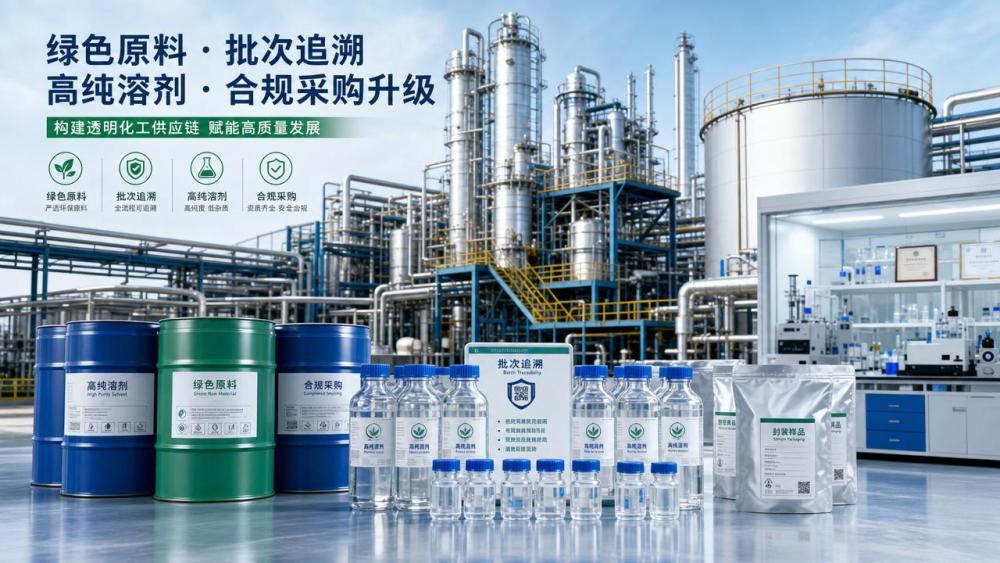
In bulk inorganic and organic chemicals, volatility remains constant. Acids, caustic soda, methanol, glycols, MDI, and TDI move with energy, freight, and regional capacity changes.
Recent chemical industry advancements add new sourcing layers. Producers now promote lower-emission routes, better process control, and stronger digital batch visibility.
In this scenario, the core judgment point is not simply unit cost. It is whether a supplier can protect continuity during feedstock shocks and compliance tightening.
A competitive quotation loses value if impurity drift affects downstream yield, or if documentation gaps delay customs clearance and customer audits.
What to examine in this scenario
- Feedstock linkage and hedging exposure
- Plant utilization, maintenance cycles, and backup capacity
- COA consistency across lots and production sites
- REACH, EPA, and destination-market documentation readiness
- Freight resilience for port, energy, or geopolitical disruption
When solvent sourcing depends on purity, safety, and process fit
Industrial specialty solvents face a different sourcing reality. Here, performance failures may appear inside extraction, cleaning, coating, or synthesis steps rather than at incoming inspection.
That is why chemical industry advancements in solvent recovery, ultra-low residue processing, and safer replacement chemistry are especially important.
A solvent may meet nominal purity yet still underperform. Water content, metal traces, stabilizer choice, and evaporation profile can alter final product quality.
The sourcing judgment point in this scenario is application compatibility. A lower-cost solvent becomes expensive if it reduces yield, leaves residue, or raises EHS controls.
Signals that matter most
Check assay stability, trace contaminant limits, packaging integrity, and recovery economics. Also verify whether the solvent aligns with customer restricted-substance lists.
Many sourcing errors occur when teams compare solvent names, but ignore process window behavior. Boiling range and drying speed often matter more than headline purity.
When additives become a route to product differentiation
For plastics, rubber, and coatings, small additive percentages can determine whether the final article passes flame, weathering, gloss, or aging requirements.
This makes chemical industry advancements in halogen-free flame retardants, non-phthalate plasticizers, anti-yellowing systems, and multifunctional modifiers highly relevant.
The sourcing challenge is subtle. One additive may look interchangeable on a datasheet, yet differ sharply in migration, dispersion, thermal stability, or long-term compliance risk.
In this scenario, the core judgment point is formulation fit over simple substitution. The best supplier supports test data, processing guidance, and stable technical service.
Typical decision factors
- Compatibility with polymer matrix or resin system
- Processing temperature tolerance
- VOC, halogen, and heavy-metal restrictions
- Long-term weathering or migration behavior
- Scale-up support from lab to mass production
When agrochemical and water treatment sourcing is compliance-intensive
Eco-friendly agrochemicals and water treatment chemicals operate under intense performance and regulatory scrutiny. Efficiency alone is not enough.
Here, chemical industry advancements include controlled-release systems, lower-toxicity actives, smarter formulations, stronger residue management, and more selective treatment chemistry.
For crop inputs, registration pathways, local residue rules, and application conditions shape sourcing value. For water treatment, dosage efficiency and sludge impact can outweigh ton price.
The key judgment point is field or plant performance under real conditions. A technically approved product still fails if local regulation, water matrix, or crop cycle is ignored.
How different sourcing scenarios require different evaluation logic
Not all chemical industry advancements affect every category equally. The table below shows how sourcing priorities shift by application scenario.
Practical ways to adapt sourcing strategy to chemical industry advancements
A useful response starts with category segmentation. Separate commodities, process-critical materials, and compliance-sensitive products before building supplier scorecards.
Then align each scorecard with the specific chemical industry advancements affecting that category, instead of using one evaluation template for all purchases.
- Map supply risk by feedstock, geography, and regulatory exposure.
- Request batch-level quality history, not only latest certificates.
- Compare total cost of use, including yield, dosage, waste, and testing.
- Screen for future compliance, not just current market legality.
- Use pilot trials for additives, solvents, and treatment chemistries.
- Build dual-source or regional backup plans for critical molecules.
This is where intelligence platforms add value. Market pricing alone cannot reveal formula barriers, registration timing, or substitution risk hidden inside technical documentation.
Common sourcing misjudgments when tracking chemical industry advancements
One common mistake is treating sustainability claims as proof of operational reliability. A greener route helps branding, but delivery discipline still decides plant performance.
Another error is overvaluing low spot prices. In chemicals, unstable quality, reformulation costs, and delayed approvals can erase short-term savings quickly.
A third mistake is assuming all compliance risk sits with the exporter. In reality, downstream sector rules can reshape acceptable chemistries with little warning.
There is also a data trap. Digital traceability tools are useful, but only when paired with technical interpretation of reaction routes, impurities, and formulation behavior.
What to do next as chemical industry advancements continue accelerating
The smartest next step is to review current categories through a scenario lens. Ask which materials are commodity-driven, which are performance-critical, and which are compliance-fragile.
Then connect those categories to the most relevant chemical industry advancements, such as low-carbon synthesis, safer substitution, traceability, or controlled-release performance.
BCIA’s intelligence model is designed for exactly this kind of evaluation. It links molecular-level understanding with market access, cost control, and eco-compliance priorities.
In a market where one ton of chemical input can influence quality, regulation, and profit at once, better sourcing begins with better interpretation of change.
Recommended News