
Search
Category
Related Industries
- How supply disruptions reshape chemical sourcing decisions worldwideGlobal chemical supply chain disruptions are reshaping sourcing. Explore smarter strategies for risk, compliance, dual sourcing, and resilient procurement.
- How to assess zero-carbon chemical synthesis catalysts for scale-upZero-carbon chemical synthesis catalysts: assess scale-up readiness through lifecycle emissions, durability, reactor fit, energy use, safety, and product quality.
- How to use a global chemical regulations guide for market entryUse a global chemical regulations guide to identify compliance triggers, reduce market-entry risks, and build a faster path to confident international chemical sales.
Weekly Insights
Stay ahead with our curated technology reports delivered every Monday.
Formula Barriers in Halogen-Free Flame Retardants




In halogen-free flame retardants, formula barriers mark the true distance between promising chemistry and reliable industrial output. Fire safety targets are no longer judged alone. Thermal stability, mechanical retention, compliance, dispersion behavior, smoke control, and delivered cost now move together. That is why formula barriers have become a strategic topic across plastics, coatings, cables, electronics, construction, and transport materials.
For the broader chemicals value chain, the issue is not simply choosing a phosphorus, nitrogen, mineral, or synergist package. The deeper challenge is building a formulation window that survives compounding, molding, aging, regulation, and margin pressure. In that sense, formula barriers are both a technical boundary and a competitive moat.
Why formula barriers are becoming the decisive battleground
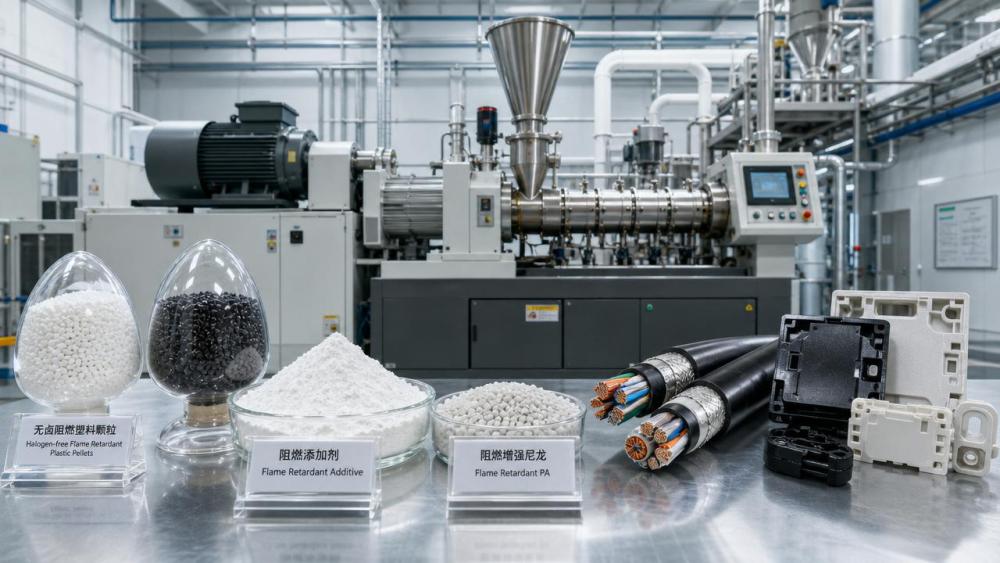
The shift away from brominated and chlorinated systems has accelerated. End-use sectors want lower toxicity profiles, cleaner smoke behavior, and easier regulatory acceptance. Yet halogen-free performance is rarely plug-and-play. Formula barriers rise quickly when one property improves while another declines.
Recent trend signals are clear. Higher power density in electronics raises heat exposure. Lightweight polymers in mobility require stricter flame performance. Green building codes are reshaping insulation standards. At the same time, global compliance systems demand more evidence on substance safety, emissions, and lifecycle impacts.
These changes elevate formula barriers from a laboratory concern to a board-level risk. A system that passes one burn test may still fail during extrusion, color control, hydrolysis resistance, recyclability, or long-term storage. Competitive advantage therefore depends on mastering interactions, not isolated ingredients.
The strongest trend signals now shaping halogen-free systems
Several market and technical shifts are making formula barriers more visible and more expensive to ignore.
- Regulations increasingly favor low-smoke, low-toxicity, and halogen-free material choices.
- Miniaturized electronics compress heat loads and narrow processing tolerances.
- Recycled and bio-based polymers introduce variable impurity and moisture profiles.
- Cost volatility in phosphorus intermediates and specialty synergists complicates formulation economics.
- Brand owners increasingly ask for multi-standard performance, not single-test qualification.
Together, these signals explain why formula barriers are rising across both commodity and specialty applications. The challenge is no longer only flame retardancy. It is flame retardancy under processing, compliance, and supply constraints.
What actually creates formula barriers in halogen-free flame retardants
Most formula barriers come from coupled trade-offs. One gain often creates a hidden penalty elsewhere. The table below summarizes the main drivers.
Among these, dispersion and thermal matching create some of the hardest formula barriers. A well-designed char former can fail if particle size, surface treatment, and screw design are misaligned. Likewise, a strong phosphorus package may underperform if melt viscosity shifts the dripping pattern.
Why the same chemistry performs differently across resin families
Formula barriers are resin-specific. Polyolefins, polyamides, TPU, epoxy, and engineering blends each present different polarity, processing heat, and degradation pathways. A halogen-free package optimized for wire and cable compounds may not translate to thin-wall electronics housings.
This is where formula barriers become intellectual property. Performance depends on additive ratios, particle engineering, encapsulation methods, catalyst residues, stabilizer balance, and processing sequence. The formula is not just composition. It is the entire reaction-and-processing logic.
How these formula barriers affect the wider industrial chain
The impact of formula barriers extends beyond additive selection. They reshape material qualification, production consistency, inventory strategy, and sustainability claims. In comprehensive industrial sectors, one unstable flame-retardant package can delay multiple downstream launches.
- Compounding lines face narrower processing windows and higher scrap risk.
- Coating and adhesive systems may lose adhesion, gloss, or cure stability.
- Cable compounds can struggle with smoke density and flexibility balance.
- Construction materials must meet fire codes without sacrificing weather resistance.
- Electronics housings require thin-wall ratings while keeping dimensional precision.
For intelligence-driven chemical platforms such as BCIA, formula barriers also define where market insight creates the most value. Bulk raw material visibility, regulatory mapping, additive mechanism analysis, and end-use test interpretation must be stitched together. Without that integration, pricing data alone does not explain performance risk.
The next competitive edge lies in barrier-aware formulation design
A clear industry trend is emerging. The most resilient halogen-free systems are not those with the highest additive loading. They are those designed around barrier-aware balance. That means evaluating flame performance together with rheology, migration resistance, color stability, toxicity profile, and sourcing resilience.
Priority areas that deserve closer attention
- Decomposition temperature alignment between flame retardant and resin.
- Surface modification methods improving dispersion without harming compliance.
- Synergist efficiency that lowers total loading and preserves mechanics.
- Smoke suppression and char integrity under real processing conditions.
- Regional substance restrictions, declaration demands, and traceability needs.
- Feedstock and intermediate price exposure affecting long-term formula viability.
These priorities help reveal whether formula barriers are temporary formulation problems or structural limitations. The distinction matters. Temporary barriers can often be solved by particle engineering or process tuning. Structural barriers may require a different additive family or a redesigned polymer architecture.
A practical framework for judging formula barriers before scale-up
Before moving from pilot batches to continuous production, a simple evaluation framework can reduce costly surprises.
- Check thermal overlap between additive package and actual processing profile.
- Measure dispersion quality, not only average particle size data.
- Test fire performance after aging, humidity exposure, and mechanical stress.
- Quantify trade-offs in impact strength, flow, density, and appearance.
- Map compliance requirements across target export and application regions.
- Stress-test supply continuity for key phosphorus, nitrogen, and mineral inputs.
Using this framework early makes formula barriers visible before capital, inventory, and customer timelines are exposed. It also improves internal alignment between material science, regulatory review, and cost planning.
What the next phase suggests for strategy and execution
The next phase of halogen-free development will reward integrated intelligence. Formula barriers will increasingly be solved through combined work on molecules, processing, and compliance evidence. Single-variable optimization will lose ground.
A stronger path is to build decision systems around formulation windows. That includes raw material trend monitoring, decomposition mechanism insight, application-specific testing, and region-specific compliance tracking. In global chemicals, formula barriers are becoming a strategic lens for choosing which products scale and which remain trapped in pilot success.
For organizations navigating flame retardant transitions, the most useful next step is a structured barrier review. Compare target standards, resin behavior, additive chemistry, documentation readiness, and cost sensitivity in one matrix. That approach turns formula barriers from hidden risk into visible strategy, and it helps identify where halogen-free innovation can become both compliant and commercially durable.
Recommended News