
Search
Category
Related Industries
- How supply disruptions reshape chemical sourcing decisions worldwideGlobal chemical supply chain disruptions are reshaping sourcing. Explore smarter strategies for risk, compliance, dual sourcing, and resilient procurement.
- How to assess zero-carbon chemical synthesis catalysts for scale-upZero-carbon chemical synthesis catalysts: assess scale-up readiness through lifecycle emissions, durability, reactor fit, energy use, safety, and product quality.
- How to use a global chemical regulations guide for market entryUse a global chemical regulations guide to identify compliance triggers, reduce market-entry risks, and build a faster path to confident international chemical sales.
Weekly Insights
Stay ahead with our curated technology reports delivered every Monday.
How chemical material innovation cuts product failure risk




For technical evaluators, product failure rarely starts at assembly. It often starts much earlier, inside resin choices, solvent purity, additive balance, and molecular stability.
That is why chemical material innovation has become a practical risk-control tool. It reduces hidden weaknesses before they become warranty claims, recalls, downtime, or compliance barriers.
Across industries, better material design improves heat tolerance, corrosion resistance, compatibility, environmental safety, and processing consistency. It also supports stronger qualification decisions across complex global supply chains.
BCIA tracks these molecular-level shifts across basic chemicals, specialty solvents, polymer auxiliaries, agrochemical systems, and water treatment chemistries. The goal is simple: connect formulation intelligence with lower product failure risk.
What does chemical material innovation really mean in failure prevention?
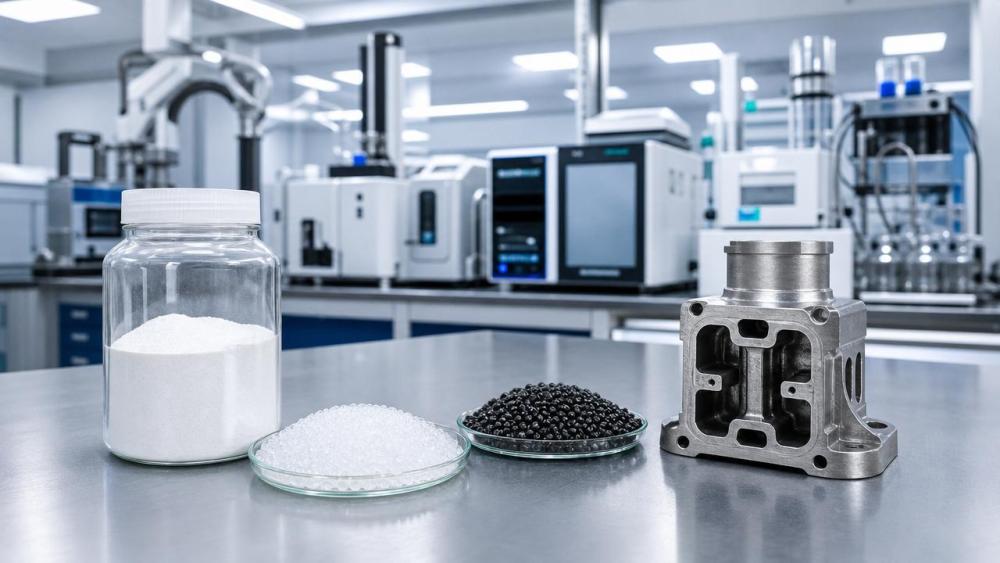
Chemical material innovation means improving a product by changing its molecular building blocks, reaction pathways, purity profile, or additive package to prevent weak performance later.
This is not limited to breakthrough inventions. Even small formulation upgrades can cut product failure risk when they solve thermal aging, hydrolysis, oxidation, migration, or contamination problems.
A coating may fail because solvent evaporation is uneven. A polymer part may crack because plasticizer migration changes flexibility over time.
An adhesive may lose bond strength because residual moisture reacts with isocyanates. A water system may foul because antiscalant chemistry mismatches the feed composition.
In each case, chemical material innovation addresses the root cause before visible failure appears. That is why early-stage material intelligence often delivers better returns than late-stage inspection.
Common failure mechanisms improved by material innovation
- Thermal degradation in plastics, coatings, sealants, and elastomers
- Corrosion triggered by impurities, moisture, or reactive residues
- Phase separation caused by poor compatibility between ingredients
- Mechanical embrittlement after UV, heat, or chemical exposure
- Regulatory failure due to restricted substances or toxic byproducts
How does chemical material innovation reduce risk across supply chains?
Product failure risk is rarely created by one factor alone. It usually grows from interactions among raw materials, process conditions, logistics exposure, storage time, and end-use environments.
Chemical material innovation lowers this risk by making formulations more tolerant to real-world variation. That matters when supply chains face source switching, climate changes, or tighter compliance rules.
For example, higher-purity basic chemicals reduce side reactions. Better solvent selection improves dispersion and reduces residue. Tailored auxiliaries enhance flame resistance, leveling, anti-aging, or impact strength.
In agriculture, controlled-release eco-chemicals can reduce over-application damage and improve uptake consistency. In water treatment, better flocculants and antiscalants reduce system instability and equipment stress.
These gains are technical, but also operational. Stable materials support predictable processing windows, fewer rejected lots, lower maintenance, and more reliable product claims.
Why BCIA focuses on molecular intelligence
BCIA treats materials as the hidden gene pool of industrial performance. Basic chemicals define core reactivity. Solvents control reaction and transfer behavior.
Additives create targeted performance jumps. Eco-compliant agrochemicals and water chemicals protect yield, safety, and environmental thresholds at the same time.
This integrated view helps explain why chemical material innovation is not an isolated laboratory exercise. It directly shapes durability, qualification speed, and total cost stability.
Which materials and applications benefit most from chemical material innovation?
The broad answer is simple: any product exposed to stress, chemistry, weather, heat, moisture, or long storage can benefit from chemical material innovation.
Still, some applications show stronger results because their failure modes are strongly tied to formulation quality rather than visible assembly defects.
High-impact application areas
- Polyurethane systems using MDI or TDI for insulation, seating, and structural foams
- Coatings that require gloss retention, anti-corrosion behavior, and weather stability
- Rubber and plastic compounds needing flame retardancy, flexibility, and anti-aging
- Precision cleaning and extraction using high-purity industrial specialty solvents
- Water treatment systems facing turbidity, heavy metals, scaling, or membrane fouling
- Agrochemical formulations requiring low toxicity, release control, and soil compatibility
In all these settings, chemical material innovation helps link lab results with field reliability. It creates more robust margins against variable processing and changing environmental demands.
How can you judge whether a material change will cut product failure risk?
Not every material update is useful. Some changes improve one property while weakening another. A lower-cost additive may reduce hardness, or a greener solvent may alter drying behavior.
A strong evaluation should compare performance, compliance, processing, and lifecycle stability together. Looking at only the initial datasheet is often not enough.
Practical evaluation checklist
- Confirm the target failure mode: heat, corrosion, cracking, migration, residue, or toxicity.
- Review purity, moisture, particle size, and impurity effects on reaction or stability.
- Test compatibility with adjacent materials, including metals, polymers, fillers, and pigments.
- Run accelerated aging under realistic stress combinations, not single-variable conditions.
- Check REACH, EPA, and local environmental restrictions before scale-up.
- Estimate supply continuity, source flexibility, and price volatility exposure.
Chemical material innovation works best when qualification includes both chemistry and commercial resilience. A technically superior formula can still create risk if sourcing is unstable.
What are the biggest mistakes when using chemical material innovation?
One common mistake is assuming higher performance in one test means lower overall failure risk. Real products face combined stresses, not isolated laboratory points.
Another mistake is treating compliance as a final paperwork step. In reality, eco-compliance should shape formulation decisions from the start.
A third mistake is ignoring process sensitivity. Some advanced materials offer excellent properties but require tighter moisture control, narrower mixing windows, or cleaner equipment.
There is also the false economy problem. Cheaper raw materials can raise total cost when they increase rework, line instability, shelf-life losses, or field failure rates.
Risk reminders
- Do not separate formulation review from supply chain review.
- Do not replace restricted chemistry without testing downstream interactions.
- Do not rely only on supplier claims when long-term durability matters.
- Do not overlook impurities in bulk inorganic and organic feedstocks.
How do cost, timing, and compliance affect chemical material innovation decisions?
Chemical material innovation is often judged by price first, but the smarter measure is total failure-adjusted cost. That includes downtime, rejects, claims, redesign, and registration delay.
Timing matters too. Late-stage material substitution can trigger repeat testing, slower approvals, and production disruption. Early screening usually lowers project friction.
Compliance adds another layer. As regulations tighten around toxicology, emissions, and persistence, materials with weak environmental positioning create future replacement risk.
BCIA’s intelligence model highlights this combined view. It links molecular behavior, regulatory thresholds, and commodity volatility so decisions are based on long-term resilience, not only short-term purchase price.
FAQ summary table
Chemical material innovation is no longer optional when products must meet tighter durability, environmental, and cost expectations at once. The safest strategy starts at the molecular level.
A disciplined review of raw materials, specialty solvents, auxiliaries, eco-chemicals, and water treatment chemistry can reveal hidden failure pathways before they become expensive outcomes.
Use chemical material innovation as a qualification framework, not just a development trend. Stronger formulations, cleaner compliance positioning, and more stable sourcing often move together.
For deeper decision support, BCIA’s intelligence approach helps connect reaction thermodynamics, formula barriers, and market realities into more reliable next-step material choices.
Recommended News