
Search
Category
Related Industries
- How supply disruptions reshape chemical sourcing decisions worldwideGlobal chemical supply chain disruptions are reshaping sourcing. Explore smarter strategies for risk, compliance, dual sourcing, and resilient procurement.
- How to assess zero-carbon chemical synthesis catalysts for scale-upZero-carbon chemical synthesis catalysts: assess scale-up readiness through lifecycle emissions, durability, reactor fit, energy use, safety, and product quality.
- How to use a global chemical regulations guide for market entryUse a global chemical regulations guide to identify compliance triggers, reduce market-entry risks, and build a faster path to confident international chemical sales.
Weekly Insights
Stay ahead with our curated technology reports delivered every Monday.
Why industrial chemical development now favors safer inputs




As regulations tighten and downstream buyers demand lower-risk formulations, industrial chemical development is shifting toward safer inputs that protect workers, simplify compliance, and strengthen supply resilience. For quality control and safety management professionals, this transition is no longer optional—it is a practical route to reducing incidents, maintaining product performance, and meeting stricter environmental expectations across manufacturing and agricultural value chains.
What safer inputs mean in industrial chemical development
In practical terms, safer inputs are raw materials with lower toxicity, lower volatility, better traceability, and more predictable handling behavior.
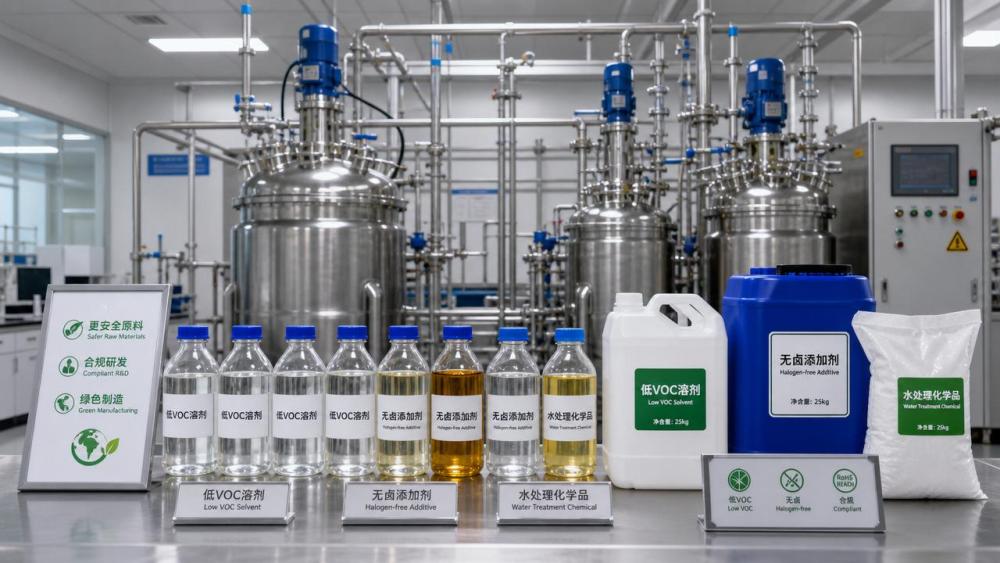
They may include low-VOC solvents, halogen-free additives, less hazardous intermediates, bio-based feedstocks, and water treatment chemicals with improved ecological profiles.
This does not mean weaker chemistry. Modern industrial chemical development increasingly balances reaction efficiency, cost, compliance, storage stability, and end-use performance.
Across basic chemicals, specialty solvents, polymer auxiliaries, agrochemical systems, and eco-chemicals, safer substitution is becoming a design rule rather than a final-stage correction.
That shift matters because input risk often determines downstream exposure, waste treatment complexity, transport classification, and long-term market access.
Why industrial chemical development now favors safer inputs
Several forces are moving in the same direction. Together, they explain why industrial chemical development is being restructured around lower-risk chemistry.
- Stricter regulations on toxic substances, emissions, residues, and workplace exposure.
- Higher customer expectations for transparent formulations and safer product declarations.
- Rising insurance, incident, and waste disposal costs linked to hazardous materials.
- Pressure to reduce supply chain disruption caused by restricted or phased-out inputs.
- Faster innovation in catalysts, green solvents, and performance additives.
In Europe and North America, REACH, EPA review processes, VOC limits, and wastewater discharge rules are changing formulation choices earlier in development.
In Asia, export-oriented production is also adapting because compliance expectations increasingly come from international customers, not only local authorities.
As a result, industrial chemical development now integrates toxicology, environmental fate, and logistics constraints before pilot scale.
Key market signals
How safer inputs create operational and business value
The value of safer inputs extends beyond compliance. Strong industrial chemical development now links molecular choice to measurable plant and market outcomes.
1. Lower safety risk across operations
Inputs with lower flammability, lower acute toxicity, or lower vapor pressure reduce routine exposure during storage, transfer, blending, and cleaning.
That can simplify ventilation needs, emergency response planning, personal protective equipment selection, and training intensity.
2. Easier regulatory alignment
Industrial chemical development built on safer inputs often faces fewer labeling complications, fewer transport restrictions, and fewer barriers in export documentation.
This is especially important where one formulation serves multiple geographies with different reporting thresholds.
3. Better supply continuity
Safer alternatives may have broader supplier networks, lower storage burden, and fewer customs complications. That can improve resilience during price shocks or policy changes.
4. Stronger customer acceptance
Many downstream sectors now require disclosure on hazardous ingredients, residuals, and environmental behavior. Safer chemistry supports faster qualification and reduced audit friction.
5. Lower total system cost
A safer material can cost more per ton yet still reduce total cost through lower waste treatment, lower incident probability, and shorter compliance cycles.
Representative areas where industrial chemical development is changing
The transition appears across the full BCIA coverage map, from core feedstocks to performance auxiliaries and environmental treatment systems.
In solvents, substitution may involve shifting from highly hazardous polar media to lower-risk systems while preserving solvency and reaction yield.
In polymer additives, industrial chemical development increasingly favors flame retardants and plasticizers with better toxicological acceptance and thermal stability.
In agrochemical and water treatment segments, formulation design now emphasizes precise dosing, reduced off-target loss, and stronger biodegradation profiles.
Typical evaluation criteria for safer input selection
A safer input should not be chosen on hazard labels alone. Good industrial chemical development compares full lifecycle and process-fit criteria.
- Human health profile, including acute and chronic exposure risks
- Environmental persistence, bioaccumulation, and aquatic impact
- Compatibility with equipment, catalysts, and packaging materials
- Effect on yield, purity, reaction time, and shelf life
- Waste treatment burden and recyclability potential
- Regional registration status and documentation quality
- Supply stability, geopolitical exposure, and cost volatility
This broader review prevents regrettable substitution, where one harmful input is replaced by another with hidden technical or environmental drawbacks.
Practical guidance for implementing safer industrial chemical development
The most effective transitions are structured, data-based, and staged. They begin with material visibility, then move toward targeted reformulation.
Build an input risk map
List all major raw materials, auxiliaries, solvents, catalysts, and treatment chemicals. Rank them by hazard, regulatory pressure, and supply vulnerability.
Prioritize high-impact substitutions
Focus first on substances with high exposure frequency, difficult waste handling, or clear market restrictions. This creates visible gains faster.
Verify performance under real conditions
Lab success alone is not enough. Pilot trials should test thermal behavior, impurity formation, corrosion effects, and long-run consistency.
Check documentation depth
Reliable safer input selection depends on full SDS quality, compositional transparency, regulatory status, and traceable quality control records.
Integrate supply and compliance intelligence
Industrial chemical development works better when formulation teams, EHS review, and supply analysis share one decision framework.
That is where sector intelligence becomes valuable. BCIA connects molecular behavior, compliance thresholds, and bulk market signals into one usable view.
Next-step focus for resilient chemical programs
Safer chemistry is no longer a side initiative. It is becoming the operating baseline for credible industrial chemical development.
The strongest programs will combine substitution planning, process validation, regional compliance review, and supply chain scenario analysis.
A practical next step is to review high-risk inputs across solvents, additives, agrochemical components, and water treatment agents using one common scorecard.
From there, industrial chemical development can move from reactive replacement to deliberate, safer design with stronger long-term performance.
For organizations tracking global basic chemicals and auxiliaries, that shift supports compliance confidence, cost discipline, and more durable market access.
Recommended News