
Search
Category
Related Industries
- Vietnam Enacts Dual-List Rule for Pesticide TechnicalsVietnam Enacts Dual-List Rule for Pesticide Technicals: New mandatory prohibited ingredient list & full auxiliary disclosure effective May 1, 2026 — act now to avoid import suspension.
- China's National Carbon Market Exceeds $500M; Chemical Additives Sector Faces Inclusion DeadlineChemical additives sector faces urgent carbon compliance: China's national carbon market exceeds $500M as EU buyers demand PAS 2050/GHG Protocol footprint reports—act now to secure orders.
- New Coal Law Designates Coal as 'Strategic National Pillar'New Coal Law designates coal as 'strategic national pillar'—key implications for halogen-based flame retardant producers, importers & supply chain partners.
Weekly Insights
Stay ahead with our curated technology reports delivered every Monday.
Global Chemical Regulations Reshaping Solvent Supply




Global chemical regulations are redrawing solvent supply faster than many market cycles. Compliance is no longer a side issue. It now shapes sourcing choices, lead times, pricing logic, and customer confidence across industrial trade.
From REACH revisions to VOC limits, transport rules, and toxicology reviews, global chemical regulations are changing which solvents move freely and which face tighter control. This shift affects availability, reformulation pressure, and cost visibility.
For a broad industrial market, the message is clear. Solvent strategy must combine regulatory intelligence, supplier screening, and flexible inventory planning. Without that balance, supply continuity and margins can erode quickly.
Regulatory pressure is becoming a direct supply variable
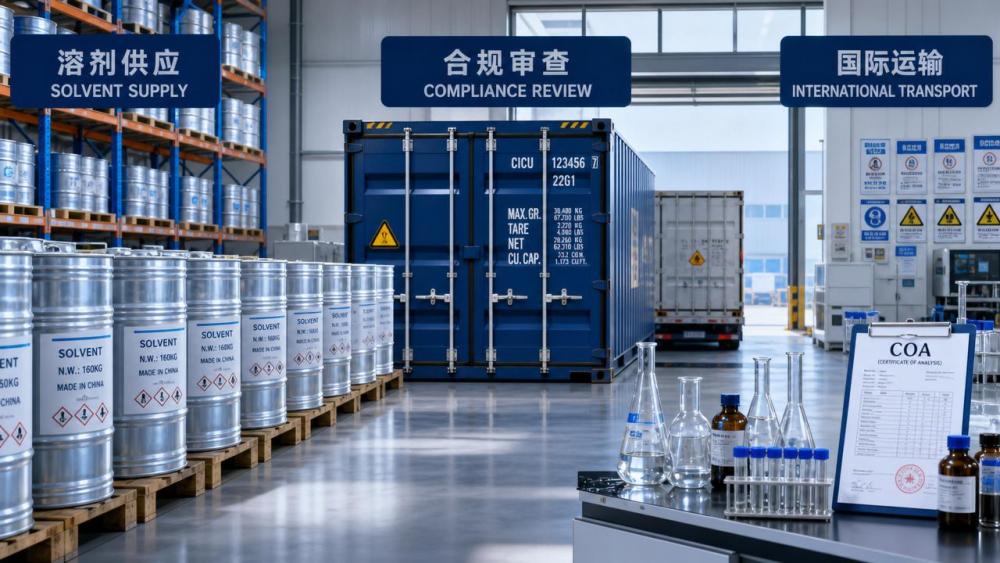
The latest trend signal is simple. Global chemical regulations are no longer limited to market entry approval. They increasingly affect every stage, from feedstock selection to labeling, shipping, storage, and end-use disclosure.
In Europe, REACH updates continue to tighten substance evaluation. In North America, workplace exposure, air emissions, and product stewardship rules are gaining weight. In Asia, local registration and environmental enforcement are becoming more consistent.
This means the solvent market is entering a new operating model. Commercial decisions now depend on whether a product remains registrable, transportable, and acceptable in multiple downstream applications.
Why this matters beyond compliance paperwork
A solvent can be technically effective yet commercially risky. If its hazard profile changes, the whole value chain may face revised packaging, lower exposure limits, or customer bans in sensitive sectors.
That is why global chemical regulations now influence procurement timing, contract structure, substitution planning, and even credit exposure. Regulatory events have become market events.
Several forces are accelerating the reshaping of solvent supply
The rise of global chemical regulations comes from overlapping policy, environmental, and market drivers. These forces are reinforcing each other rather than moving separately.
These drivers explain why global chemical regulations are not a temporary disruption. They are building a structural filter for solvent selection in pharmaceuticals, coatings, electronics cleaning, agrochemical formulation, and water treatment chemistry.
The move from hazard awareness to market exclusion
A key trend is the transition from warning labels to practical exclusion. Once a solvent becomes hard to insure, store, transport, or use, demand can fall even before an official ban appears.
This creates a silent withdrawal effect. Supply may still exist on paper, yet commercial usability shrinks quickly. Global chemical regulations often work through this indirect pressure.
The impact is spreading across sourcing, pricing, and application decisions
The first impact appears in sourcing. Approved producers gain more strategic value, while unverified origins create hidden risk. Documentation quality now matters almost as much as chemical purity.
The second impact appears in pricing. A low unit price can become expensive after added testing, delayed customs release, packaging changes, or restricted end-use approval.
The third impact appears in formulation decisions. Some traditional solvents still perform well technically, but alternatives may win because they lower exposure concerns or simplify market access.
- Lead times become less predictable when registration or shipping status changes.
- Inventory buffers may need revision for restricted or high-scrutiny solvent grades.
- Customer qualification cycles become longer for sensitive applications.
- Alternative solvents gain premium value when compliance is stronger.
Across the comprehensive industrial sector, global chemical regulations also affect adjacent categories. Additives, intermediates, cleaning fluids, extraction media, and processing aids are all exposed to the same pattern.
The most resilient supply strategies now start with regulatory mapping
A stronger response begins by treating global chemical regulations as part of supply planning, not just legal review. The goal is to map where a solvent may face future friction before disruptions appear.
Priority points worth monitoring
- Registration status in target export markets and major re-export hubs.
- Hazard classification updates that may alter handling or labeling requirements.
- VOC, emissions, and waste disposal rules linked to end-use sectors.
- Transport compatibility under IMDG, ADR, or local dangerous goods frameworks.
- Supplier data quality, including SDS accuracy, test methods, and traceability.
- Substitution readiness for solvents facing higher toxicological scrutiny.
This monitoring model supports broader business stability. When global chemical regulations tighten, the best-prepared supply chains already know which products are exposed, replaceable, or strategically defensible.
Practical response should balance compliance depth with commercial flexibility
A useful response is not simply to abandon every higher-risk solvent. The better approach is to segment products by regulatory sensitivity, technical necessity, and substitution cost.
This is where market intelligence becomes decisive. BCIA tracks basic chemicals, specialty solvents, industrial auxiliaries, and eco-chemicals through both molecular performance and compliance feasibility.
That dual view helps identify whether a solvent is merely available today or truly sustainable within future global chemical regulations. The difference can determine long-term commercial resilience.
The next phase will reward early adaptation, not late reaction
The solvent market is moving toward selective acceptance. Products with stronger registration support, cleaner toxicology profiles, and better documentation will likely capture a larger share of stable demand.
At the same time, global chemical regulations will continue to fragment by region. A solvent accepted in one market may face narrow conditions or practical barriers in another. Harmonization remains limited.
That makes early judgment more valuable than reactive switching. Watching policy drafts, candidate lists, and customer sustainability criteria can reveal demand migration before it becomes visible in trade flows.
A focused next-step checklist
- Audit top solvent lines against current and pending global chemical regulations.
- Identify high-margin products with hidden compliance dependence.
- Create a substitute map for restricted, high-VOC, or high-scrutiny solvents.
- Strengthen supplier due diligence with document and registration verification.
- Use intelligence support to align chemistry, cost, and market access.
Global chemical regulations are reshaping solvent supply from the inside out. The strongest position will come from combining compliance foresight with practical sourcing discipline. In a market defined by tightening rules, informed adaptation is now a growth advantage.
Recommended News