
Search
Category
Related Industries
- Vietnam Enacts Dual-List Rule for Pesticide TechnicalsVietnam Enacts Dual-List Rule for Pesticide Technicals: New mandatory prohibited ingredient list & full auxiliary disclosure effective May 1, 2026 — act now to avoid import suspension.
- China's National Carbon Market Exceeds $500M; Chemical Additives Sector Faces Inclusion DeadlineChemical additives sector faces urgent carbon compliance: China's national carbon market exceeds $500M as EU buyers demand PAS 2050/GHG Protocol footprint reports—act now to secure orders.
- New Coal Law Designates Coal as 'Strategic National Pillar'New Coal Law designates coal as 'strategic national pillar'—key implications for halogen-based flame retardant producers, importers & supply chain partners.
Weekly Insights
Stay ahead with our curated technology reports delivered every Monday.
Advanced chemical technologies that reduce downtime first




For after-sales maintenance teams, unexpected shutdowns mean lost output, urgent repairs, and rising service pressure. Advanced chemical technologies are reshaping how facilities prevent corrosion, fouling, wear, and process instability before failures spread.
This article explains where these technologies create the fastest operational impact, how maintenance teams can evaluate them, and which applications most reliably reduce downtime, risk, and repeat service events.
What users searching for advanced chemical technologies usually want to know first
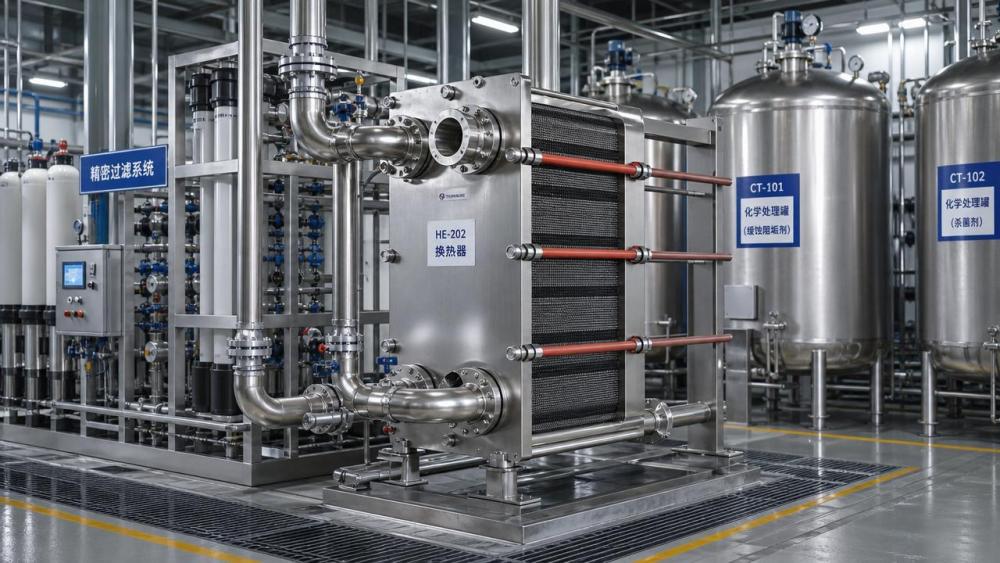
When maintenance professionals search for advanced chemical technologies, they are rarely looking for theory alone. They want practical ways to keep equipment running longer and avoid avoidable shutdowns.
The core search intent is clear: which chemical solutions can prevent corrosion, scale, contamination, wear, leaks, and process instability before these issues trigger unplanned maintenance or production loss?
For after-sales maintenance teams, the most important questions are usually immediate and operational. Which products work in real industrial conditions, how fast can they be implemented, and what risks come with improper selection?
They also want help comparing options. A solvent, inhibitor, dispersant, coating additive, or water-treatment chemistry may all promise reliability, but the real value lies in measurable downtime reduction.
That is why this topic should not be treated as a broad innovation overview. It should focus on failure prevention, chemical compatibility, maintenance decision-making, compliance, and service outcomes.
Why advanced chemical technologies matter more in maintenance than many teams realize
Many equipment failures are mechanical in appearance but chemical in origin. Corrosion under insulation, scale in cooling loops, solvent residue in precision cleaning, and polymer degradation often begin silently.
By the time alarms trigger or performance drops become obvious, the underlying damage has usually progressed. Maintenance teams then face longer repairs, more spare parts use, and difficult customer conversations.
Advanced chemical technologies help move maintenance from reaction to prevention. They control the molecular causes of deposition, oxidation, contamination, and material breakdown before these problems cascade.
This matters especially in plants using aggressive feedstocks, variable water quality, high temperatures, or tightly controlled production lines. In such settings, small chemical mismatches can quickly become major reliability events.
The strongest technologies do not simply “treat” a symptom. They stabilize the operating environment, extend equipment life, reduce emergency interventions, and improve predictability for both service teams and plant operators.
Which chemical applications reduce downtime first in real facilities
Not every chemical upgrade delivers the same speed of return. For most maintenance teams, the fastest gains usually come from water-treatment chemistry, specialty cleaning solvents, corrosion inhibition, and performance additives.
Water-treatment chemicals often provide the quickest visible benefit. Antiscalants, dispersants, oxygen scavengers, biocides, and flocculants can reduce exchanger fouling, prevent blocked lines, and stabilize heat-transfer efficiency.
In cooling towers, boilers, and closed loops, poor water chemistry is a common hidden driver of shutdowns. Better treatment programs lower cleaning frequency and reduce the risk of overheating and pressure loss.
Specialty solvents are another high-impact area. In electronics cleaning, coating preparation, metal degreasing, or residue removal, advanced solvents can improve cleaning precision without attacking sensitive materials.
That directly helps maintenance teams reduce rework. Cleaner surfaces support better bonding, smoother coating performance, lower contamination risk, and fewer repeat failures caused by incomplete cleaning or trapped residues.
Corrosion inhibitors also rank high for near-term value. In pipelines, storage systems, cooling circuits, and process units, modern inhibitor packages can slow metal loss dramatically when matched correctly to chemistry and temperature.
Performance additives matter as well, especially in seals, coatings, plastics, and rubber components. Anti-aging additives, flame retardants, leveling agents, and stabilizers can extend service intervals in harsh operating environments.
How smarter water-treatment chemicals prevent repeat shutdowns
For many industrial sites, water is the most underestimated reliability variable. It can carry hardness, dissolved oxygen, chlorides, microbes, suspended solids, and contaminants that steadily damage system performance.
Advanced chemical technologies in water treatment are designed to interrupt these failure pathways early. They control deposition, inhibit corrosion, suppress biological growth, and support more stable circulation conditions.
For after-sales maintenance teams, this matters because many customer complaints begin with symptoms rather than root causes. Reduced flow, higher energy use, heat-transfer loss, and frequent cleaning often point back to chemistry.
A well-designed program may include flocculants for solids separation, antiscalants for membrane protection, corrosion inhibitors for metal surfaces, and biocides suited to the site’s microbial load and discharge rules.
The maintenance advantage is not only fewer shutdowns. Teams also gain better inspection intervals, more stable performance data, and stronger evidence when explaining why a chemical treatment change is operationally justified.
In regulated sectors, advanced programs also support eco-compliance. Better chemical selection can reduce overfeed, improve wastewater handling, and align maintenance practices with increasingly strict environmental expectations.
Why specialty solvents and cleaning chemistries are critical to equipment reliability
Cleaning is often treated as a routine task, but poor cleaning chemistry is a major cause of maintenance failure. Residues left behind can trigger corrosion, insulation failure, coating defects, and sensor inaccuracies.
Advanced solvents are engineered not only for dissolving power, but also for evaporation profile, material compatibility, residue control, worker safety, and environmental performance. Those factors directly affect maintenance outcomes.
For example, high-purity solvents used in electronic assemblies or precision parts cleaning can reduce conductive contamination that causes intermittent faults and difficult-to-diagnose service calls later.
In industrial coating preparation, the right solvent package improves wetting and contaminant removal. That helps coatings adhere more consistently, lowering the risk of blistering, peeling, and underfilm corrosion.
Maintenance teams should evaluate cleaning chemistry by application, not by price alone. A cheaper solvent that leaves residue, damages seals, or increases ventilation burden can create far greater downstream downtime costs.
The best decision framework considers substrate type, contaminant profile, drying needs, operator exposure, VOC restrictions, and whether cleaning performance can be verified through repeatable inspection standards.
How additives and material enhancers extend component life
Downtime is not always caused by large equipment failure. It often starts with smaller component degradation in gaskets, hoses, coatings, insulation materials, plastics, and elastomers exposed to heat, chemicals, or UV stress.
Advanced chemical technologies in additives help these materials survive longer. Stabilizers, plasticizers, anti-oxidants, flame retardants, and impact modifiers can significantly improve physical durability in demanding service conditions.
For maintenance teams, this means fewer premature replacements and lower risk of secondary failures. A degraded seal can become a leak, a brittle coating can expose metal, and a weak plastic part can disrupt an entire process line.
Choosing improved materials is especially valuable in recurring failure zones. If the same component repeatedly fails under known temperature, solvent, or abrasion conditions, additive-enhanced alternatives deserve serious review.
This is where collaboration between maintenance, procurement, and technical suppliers matters. A modest change in formulation can generate a large reliability gain, but only if the actual stress environment is well understood.
What after-sales maintenance teams should check before adopting any chemical solution
Even the best chemistry can fail if it is poorly matched to the process. Maintenance teams need a disciplined evaluation method before introducing new advanced chemical technologies into customer operations.
First, confirm the failure mode. Is the problem really corrosion, scale, contamination, swelling, oxidation, or material fatigue? Chemical products are often misapplied because teams treat symptoms instead of diagnosing root causes.
Second, verify compatibility. Check how the chemistry interacts with metals, polymers, seals, coatings, membranes, and process fluids. Compatibility mistakes can create exactly the downtime the treatment was meant to prevent.
Third, review operating conditions carefully. Temperature, pH, flow rate, residence time, pressure, and contaminant load all affect chemical performance. A product successful in one plant may underperform badly in another.
Fourth, consider compliance and handling. VOC limits, wastewater discharge standards, REACH requirements, worker exposure rules, and storage controls can all influence whether a technology is practical at scale.
Fifth, insist on measurable performance indicators. Good examples include reduced cleaning frequency, lower corrosion rates, improved heat-transfer efficiency, fewer filter changes, lower defect rates, and reduced emergency callouts.
How to prioritize chemical upgrades when resources are limited
Maintenance teams rarely have the budget or time to improve every chemistry-related issue at once. A practical prioritization model helps focus attention on the applications with the highest downtime and service burden.
Start with assets linked to the costliest unplanned outages. Heat exchangers, cooling loops, wastewater systems, pumps, storage tanks, coating lines, and precision cleaning stages often produce the strongest return from chemical optimization.
Next, identify recurring failure patterns. If the same blockage, corrosion issue, seal failure, or contamination complaint appears repeatedly, there is a good chance a chemical control strategy can address it.
Then compare ease of implementation. Some improvements, such as water-treatment adjustment or cleaning chemistry substitution, can be introduced faster than a full equipment redesign or major materials replacement.
Finally, look at total service impact. The best projects are not always the most technically sophisticated. They are often the ones that reduce repeat visits, improve first-time fix rates, and make system performance more stable.
Common mistakes that stop advanced chemical technologies from delivering value
One common mistake is treating all products in a category as interchangeable. Not all inhibitors, solvents, dispersants, or additives work the same way, even if supplier labels sound similar.
Another mistake is focusing only on purchase cost. Maintenance teams should evaluate total operational cost, including labor, downtime, energy use, waste handling, shortened component life, and customer disruption.
Poor monitoring is another problem. If no baseline is defined before implementation, teams may struggle to prove value later. Without data, effective chemistry can be cut simply because benefits were not documented.
Overdosing and underdosing also cause trouble. More chemistry does not always mean better protection. Incorrect dosing can create deposits, incompatibility issues, discharge problems, or unnecessary chemical spending.
Finally, some organizations separate maintenance too sharply from process and compliance teams. The best results usually come when chemical decisions include operational, safety, environmental, and procurement perspectives together.
A practical bottom line for maintenance professionals
For after-sales maintenance teams, advanced chemical technologies are not abstract innovations. They are practical tools for reducing downtime, preventing repeat failures, and improving equipment reliability under real operating pressure.
The most useful solutions are usually the ones that address root causes early: water-treatment programs that control fouling and corrosion, specialty solvents that improve cleaning quality, and additives that extend component durability.
When evaluated through compatibility, compliance, operating conditions, and measurable performance indicators, these technologies can create clear maintenance value without waiting for major capital projects.
The strongest takeaway is simple. If a facility keeps experiencing avoidable shutdowns, the answer may not be another mechanical fix alone. The faster route may be a smarter chemical strategy built around prevention.
In that sense, advanced chemical technologies reduce downtime first because they act before visible failure begins. For maintenance teams, that prevention-first approach is often the most effective service advantage of all.
Recommended News