
Search
Category
Related Industries
- Vietnam Enacts Dual-List Rule for Pesticide TechnicalsVietnam Enacts Dual-List Rule for Pesticide Technicals: New mandatory prohibited ingredient list & full auxiliary disclosure effective May 1, 2026 — act now to avoid import suspension.
- China's National Carbon Market Exceeds $500M; Chemical Additives Sector Faces Inclusion DeadlineChemical additives sector faces urgent carbon compliance: China's national carbon market exceeds $500M as EU buyers demand PAS 2050/GHG Protocol footprint reports—act now to secure orders.
- New Coal Law Designates Coal as 'Strategic National Pillar'New Coal Law designates coal as 'strategic national pillar'—key implications for halogen-based flame retardant producers, importers & supply chain partners.
Weekly Insights
Stay ahead with our curated technology reports delivered every Monday.
Industrial Water Treatment: Biocide Dosing Mistakes




In industrial water treatment, biocide dosing mistakes often stay hidden until biofilm, odor, underdeposit corrosion, or discharge failures appear. Small dosing errors can reshape microbial balance, weaken heat transfer, and raise chemical use. Understanding these failures helps improve system reliability, safety performance, and total treatment cost.
What counts as a biocide dosing mistake in industrial water treatment?
A dosing mistake is not only using too little biocide. It also includes poor timing, wrong injection points, incompatible chemistry, and weak monitoring.
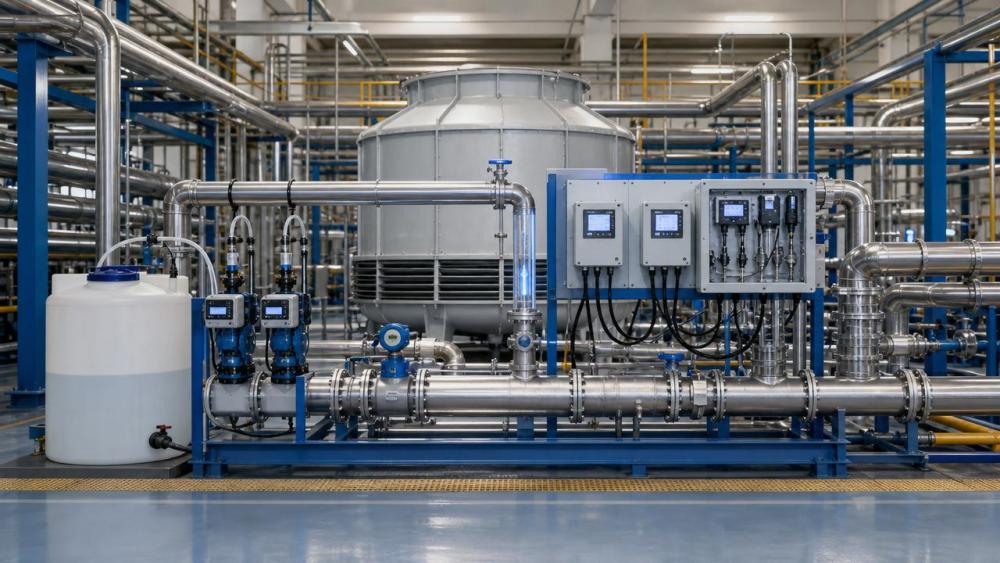
In industrial water treatment, biocides must match microbial load, residence time, pH, temperature, and organic demand. Missing one variable can cut performance sharply.
Many systems fail because operators assume label dosage equals effective dosage. Real water conditions rarely stay constant across cooling towers, process loops, storage tanks, or wastewater units.
Common biocide dosing mistakes include:
- underfeeding during peak contamination periods
- overfeeding to compensate for poor control
- continuous dosing where shock dosing works better
- injecting after filtration or at low-mixing zones
- mixing oxidizing and non-oxidizing products incorrectly
- ignoring contact time and kill verification
These errors matter across comprehensive industries because industrial water treatment supports utilities, cleaning, production stability, and environmental compliance in nearly every plant.
Why does underdosing or overdosing create bigger problems than expected?
Underdosing allows microbes to recover and adapt inside slime layers. Once biofilm forms, the same chemical dose often loses much of its apparent strength.
Biofilm is not just a hygiene issue. It blocks heat exchange, traps solids, creates anaerobic pockets, and accelerates microbiologically influenced corrosion.
Overdosing seems safer, but it can create a different set of failures. Excess oxidizers may attack metallurgy, seals, membranes, and downstream biological treatment.
Some facilities also face worker exposure concerns when aggressive doses increase fumes, reactive residues, or chemical handling frequency.
In industrial water treatment, both extremes can increase cost:
- higher blowdown and water loss
- shorter equipment service life
- more emergency cleaning shutdowns
- greater neutralization or dechlorination demand
- repeat laboratory investigations and retesting
The best dosing window is narrow enough to control microbes yet stable enough to protect assets, people, and discharge targets.
Which industrial water treatment conditions most often distort biocide performance?
Water chemistry changes biocide behavior quickly. pH is one of the most important factors, especially for oxidizing products like chlorine-based treatments.
High suspended solids can shelter bacteria. Organic contamination can consume active ingredients before they reach target organisms.
Temperature also matters. Higher temperatures may speed reactions, but they can also shorten persistence in some industrial water treatment programs.
Other performance distortions include poor hydraulics, dead legs, stagnant tanks, and recirculation loops with uneven flow distribution.
Key variables that change effective dose
- pH and alkalinity
- oxidant demand from organics or reducing agents
- system volume and actual retention time
- biofilm thickness and deposit load
- makeup water variability
- compatibility with antiscalants, dispersants, or corrosion inhibitors
A common industrial water treatment mistake is adjusting dose without checking these variables first. That approach treats symptoms while leaving root causes untouched.
How can dosing frequency, timing, and injection point change results?
Biocide chemistry is only half the answer. Delivery strategy often decides whether the dose reaches microorganisms before decomposition or dilution occurs.
For some cooling systems, slug or shock dosing breaks microbial cycles better than low continuous feed. In other systems, steady residual control works better.
Timing should consider peak contamination events. These may follow production changeovers, warm weather, nutrient-rich washdowns, or periods of reduced circulation.
Injection location is equally critical. Dosing into a dead zone or immediately before a loss point can waste chemical and leave high-risk areas untreated.
Better industrial water treatment practice usually includes:
- map actual flow paths and residence time
- place injection where turbulence supports mixing
- separate incompatible chemical feed points
- align dosing cycles with microbial pressure patterns
- verify residual or kill response after every change
Even a well-chosen product can fail if contact time is too short or if the active compound disappears before it reaches remote sections.
How should industrial water treatment teams monitor dosing success?
Monitoring should go beyond checking pump settings. Feed rate alone does not confirm microbial control, chemical compatibility, or system-wide distribution.
Useful monitoring combines direct and indirect indicators. Direct checks include dip slides, ATP tests, culture methods, and residual measurements where relevant.
Indirect checks include heat exchanger pressure drop, corrosion trends, odor changes, slime observations, turbidity shifts, and discharge excursions.
A strong industrial water treatment review schedule often covers:
Trend analysis is more valuable than isolated numbers. A single passing result can hide a dosing pattern that fails every weekend or during production surges.
What is the best way to reduce biocide dosing errors and improve cost control?
The most effective response is a structured review of chemistry, hydraulics, microbiology, and operating rhythm. Industrial water treatment works best when these factors are aligned.
Start with a baseline assessment. Confirm system volume, contamination sources, dead legs, seasonal changes, and interactions with other treatment chemicals.
Then test dosing logic rather than guessing. Small controlled trials can compare pulse frequency, contact time, and injection location with measurable results.
Practical improvement steps include:
- standardize sampling times and test methods
- calibrate metering pumps and verify actual output
- review Safety Data Sheets and compatibility notes
- use cleaning or biodispersant steps when biofilm is mature
- document cause and effect after every adjustment
- connect treatment records with maintenance and discharge events
For broad industrial settings, this disciplined approach reduces hidden chemical waste and supports the dual goal of eco-compliance and lower lifecycle cost.
Quick FAQ reference table
Industrial water treatment becomes more stable when dosing decisions are evidence-based, not habit-based. The safest programs control microbes without creating new corrosion, safety, or compliance problems.
Review current dosing points, residual trends, and microbial data together. That simple next step often reveals where biocide dosing mistakes are quietly driving cost and risk.
Recommended News