
Search
Category
Related Industries
- How supply disruptions reshape chemical sourcing decisions worldwideGlobal chemical supply chain disruptions are reshaping sourcing. Explore smarter strategies for risk, compliance, dual sourcing, and resilient procurement.
- How to assess zero-carbon chemical synthesis catalysts for scale-upZero-carbon chemical synthesis catalysts: assess scale-up readiness through lifecycle emissions, durability, reactor fit, energy use, safety, and product quality.
- How to use a global chemical regulations guide for market entryUse a global chemical regulations guide to identify compliance triggers, reduce market-entry risks, and build a faster path to confident international chemical sales.
Weekly Insights
Stay ahead with our curated technology reports delivered every Monday.
China Imposes Temporary Export Ban on Helium, Pressuring Semiconductor and Fiber Supply Chains




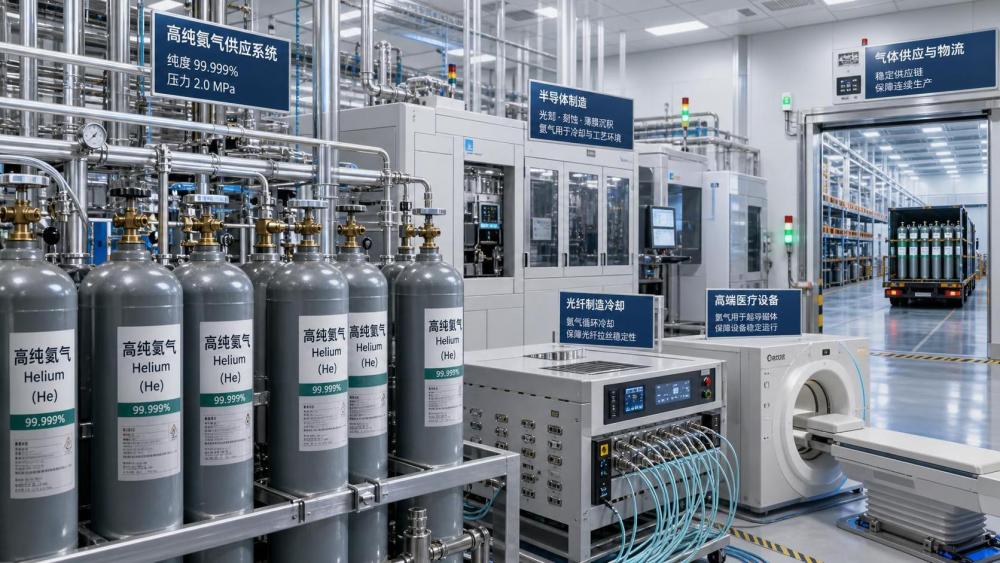
On 2026-07-10, China’s Ministry of Commerce and General Administration of Customs jointly announced a temporary export ban on helium under HS code 2804290010. Because helium is a critical inert medium for semiconductor etching, fiber-optic cooling, and high-end medical imaging, this rule change is likely to matter well beyond customs clearance: it may affect procurement planning, cross-border gas trading, blended-gas formulation, and delivery reliability for downstream manufacturers that rely on steady supply channels.
What the new export control covers
The only confirmed facts are straightforward. As of 2026-07-10, China has placed helium under temporary export ban management. The controlled product is helium classified under HS code 2804290010. The event summary identifies helium as an indispensable inert medium used in semiconductor etching, fiber cooling, and high-end medical imaging, and notes that a substantial share of commercial helium supply depends on China’s import transit and purification channel.
Where the pressure is most likely to show up
Semiconductor and fiber users face immediate sourcing friction
Analysis suggests that semiconductor manufacturers and optical fiber producers are among the first groups likely to feel the impact, not because their end products change, but because helium sits inside critical process steps. The main pressure points are procurement timing, inventory buffers, and the ability to keep process gas supply stable when alternative sourcing paths are limited or slower than normal.
Gas blend formulators and distributors may need to rework supply plans
Gas mixture suppliers and industrial gas distributors that depend on stable helium flows through China are likely to face the sharpest commercial adjustment. Their business is exposed at the purchasing and re-export stages, where one rule change can alter contract delivery terms, replenishment cycles, and customer commitments. At this stage, it is more appropriate to view the situation as a trade execution risk rather than a confirmed market disruption across all channels.
Medical imaging and equipment service chains should watch spare supply and continuity
High-end medical imaging users are not named as direct trade actors in the announcement, but helium’s role in that field means service continuity may become a practical concern. Equipment operators, integrators, and after-sales providers should pay attention to whether spare gas sourcing, maintenance scheduling, or service-level commitments need to be adjusted if upstream supply becomes tighter.
What companies should check now
Review contract terms against the new export status
Companies handling helium orders should check whether existing contracts, delivery windows, and Incoterms-related responsibilities still match the current export status. The main question is whether any pending shipments, re-export arrangements, or replenishment plans rely on routes that are no longer usable under the temporary ban.
Verify customs, documentation, and product classification records
Because the measure is tied to HS code 2804290010, trade and compliance teams should verify that customs classifications, product descriptions, and supporting documents are internally consistent. Where helium is part of a mixed-gas product or a broader supply package, companies should confirm how the affected item is represented in shipping and customs paperwork.
Reassess inventory and substitute supply options
From a procurement perspective, this is a signal to reassess stock coverage and alternate sourcing assumptions. Any substitute material, substitute gas, or revised formulation should be validated against process requirements before being adopted. For users with tight uptime requirements, the practical issue is not only price but whether the replacement can support the same operating conditions and delivery cadence.
How to read this move
What deserves closer attention is whether this announcement remains a temporary control measure with narrow customs implications or develops into a more detailed enforcement pattern over time. Based on the information available, the safest reading is that this is an execution signal, not yet a full picture of downstream enforcement practice. The market will likely watch for clarified customs handling, customer-facing transaction rules, and any feedback from gas suppliers, distributors, and major industrial users.
For now, the event should be understood as a direct compliance and supply-chain planning issue. It is less useful to treat it as a broad industry narrative and more useful to treat it as a rule change that can alter sourcing decisions, delivery reliability, and procurement risk management for affected sectors.
What this means for the market now
The practical takeaway is that helium-dependent businesses need to move from assumption to verification. The announcement is already a live trade-control change, but its commercial impact will depend on how companies interpret customs handling, how quickly procurement teams adjust orders, and whether alternative supply paths can be validated without disrupting operations. The most rational response is to monitor implementation closely and update sourcing and compliance checks in parallel.
Source basis for this report
This article is generated solely from the user-provided title, event date, and event summary. No specific official source link was provided in the input. For events of this kind, the relevant source types would typically include official notices, statements from trade or customs authorities, and industry or customs implementation updates. Further verification should continue as policy details, enforcement wording, customs handling, and market feedback become available.
Recommended News