
Search
Category
Related Industries
- BASF Starts Up $1 Billion MDI Plant, Doubling Annual Capacity to 600,000 TonnesBASF's $1 billion Geismar MDI plant reportedly doubles annual capacity to 600,000 tonnes. Explore the potential impact on North American supply and sourcing.
- How sustainability trends are reshaping chemical supply chainsExplore chemical industry trends sustainability leaders need to know, from lower-carbon sourcing to circularity, safer chemistry, and supply chain resilience.
- 40th China Plant Protection Fair Opens in Chengdu With Standards and RNA Pesticide FocusChina Plant Protection Fair in Chengdu highlights 10 group standards and RNA pesticide technology. Explore what buyers and suppliers need to verify.
Weekly Insights
Stay ahead with our curated technology reports delivered every Monday.
China's Soda Ash Producer Inventories Reach 1.4401 Million Tonnes on November 19




On November 19, 2026, China's soda ash producers reported a small increase in total inventories, according to data from Longzhong Information, with heavy-grade stocks rising while light-grade stocks declined. The information provided identifies no new policy, regulation, standard or trade rule. It does, however, give producers, purchasers and traders a reason to review how grade-specific availability may affect procurement and delivery decisions, while avoiding assumptions about changes to compliance obligations.
Heavy-grade stocks account for the increase
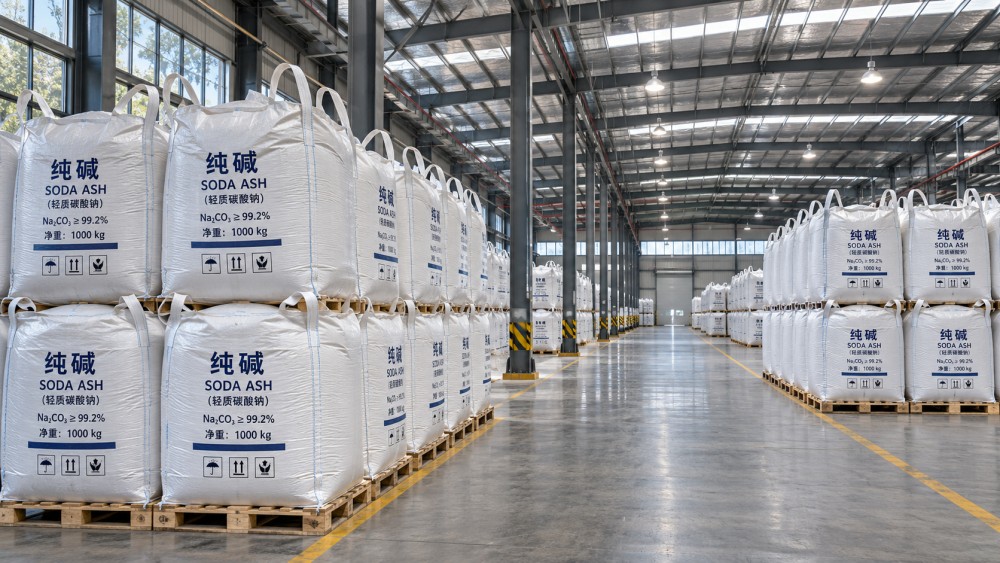
As of November 19, domestic soda ash producers held total inventories of 1.4401 million tonnes, up 4,900 tonnes, or 0.34%, from Monday of the same week, according to Longzhong Information. The figures describe stocks held by producers.
Light soda ash inventories stood at 784,900 tonnes, down 3,600 tonnes from the comparison point. Heavy soda ash inventories reached 655,200 tonnes, up 8,500 tonnes. The increase in heavy-grade stocks exceeded the decrease in light-grade stocks, producing a small net accumulation across the two grades.
Different stock movements call for separate purchasing decisions
Buyers comparing light and heavy grades
From a purchasing perspective, the main analytical point is the divergence between the grades. A buyer whose orders specify light soda ash may find the overall inventory increase less useful as a planning indicator than the decline in light-grade stocks. A buyer seeking heavy soda ash may instead want to examine how the reported increase relates to the grade, quantity and delivery terms offered by its own suppliers.
Neither movement establishes that a particular supplier has stock available for an immediate order. The reported figures are aggregate producer inventories, and the input does not identify individual suppliers, locations or available shipment dates. Buyers may therefore wish to confirm those details directly before changing order quantities or delivery schedules.
Producers and trading channels
Analysis suggests that producers and traders may need to discuss the two grades separately when responding to inquiries. A small increase in total stock can conceal opposing changes in the underlying products, making a single combined figure an incomplete basis for quotations or allocation discussions.
For traders, the practical question is whether a quoted product can be supplied on the terms requested by the customer. That may involve checking the grade, the quantity offered, the expected dispatch date and the documents specified in the transaction. The inventory report itself does not establish any change in trade documentation, product certification or regulatory requirements.
Manufacturers and delivery planners
For manufacturers that purchase soda ash, the potential effect lies in matching material needs with confirmed deliveries. If a business relies on one grade for a particular process, an increase in the other grade's reported inventory does not by itself resolve its purchasing needs. Delivery planners may find it useful to compare scheduled receipts with supplier confirmations for each grade.
Any effect on lead times, transport arrangements or production schedules remains uncertain. The supplied data do not describe orders, transport capacity or actual delivery performance. These possible consequences should therefore be assessed against each company's contracts and supplier information rather than treated as outcomes of the inventory change.
Checks to make before adjusting orders
Confirm grade-specific availability
Businesses considering a purchase may start by separating light and heavy soda ash requirements in their inquiries. They can ask suppliers to confirm the quantity available for the required grade and the period in which it can be dispatched. This check connects the aggregate inventory figures to an actual purchase decision without assuming that reported stocks are evenly accessible.
Where an existing order is involved, reviewing the agreed grade and delivery window may help identify whether a proposed change would require agreement between the parties. The report gives no indication that existing contracts have changed; any adjustment would depend on the terms of the relevant transaction.
Keep inventory comparisons consistent
The reported changes compare November 19 with Monday of the same week. Businesses tracking subsequent reports may wish to check the date, comparison period and categories used before drawing conclusions. A later total can move for different reasons, including changes in the balance between light and heavy inventories.
It may also be useful to distinguish producer inventory data from a supplier's own offer. The former describes a reported aggregate; the latter concerns the material and terms available to a specific buyer. Treating those as separate inputs can make procurement reviews more precise.
Review product and delivery documents
As a practical precaution, purchasers and suppliers may review the product description, grade, quantity and delivery provisions in their order documents. If a transaction calls for particular quality documentation or other supporting records, the parties can verify those requirements against their agreement and any applicable rules.
This is a suggested transaction review, not a newly announced compliance obligation. The information supplied does not identify a revised standard, certificate, testing procedure or document requirement. Companies should verify any such requirement independently before treating it as applicable.
Assess alternatives before making a switch
If a preferred grade or delivery window cannot be confirmed, a buyer might evaluate another supplier or an alternative delivery schedule. A proposed substitution between light and heavy soda ash would require particular care: the reported inventory figures alone do not establish that the grades are interchangeable for a customer's intended use.
Any substitution should be evaluated against the buyer's technical needs and contractual commitments. The supplied information does not provide product specifications or evidence that a substitute has been approved, so no conclusion about suitability can be drawn from the inventory report.
Why this is a market signal, not a rule change
At this stage, it is more appropriate to understand the report as a snapshot of producer inventories than as evidence of a policy or regulatory development. The supplied information contains no announced change to law, certification, trade rules or enforcement. Nor does it establish that authorities or market participants have introduced a new requirement in response to the stock movement.
From an industry perspective, the distinction matters because the next action depends on the type of information available. An inventory observation may prompt a buyer to seek updated commercial terms; a confirmed rule change would need to be assessed against its actual wording and scope. This report supports the former kind of inquiry, but does not provide a basis for asserting the latter.
What deserves closer attention is whether later, comparable data show continued divergence between the grades and whether suppliers report any practical change in availability or delivery terms. A single small increase in total inventories cannot establish a sustained trend, the cause of the movement, or its effect on prices. Those questions remain open on the information provided.
Companies monitoring compliance can also watch for separately verified announcements or changes in transaction requirements where relevant. Such monitoring is a precautionary step; the input supplies no evidence that a policy measure or revised certification approach is pending.
A measured response to a mixed inventory picture
The November 19 figures show a modest net increase in producer stocks alongside a decline in light soda ash and an increase in heavy soda ash. For businesses handling either grade, the most useful response may be to check their own requirements and obtain current supplier confirmations rather than infer a common outcome from the total alone.
The report should be treated as one market observation requiring follow-up. Its practical significance for any purchase or delivery will depend on the grade, supplier and agreed terms. No regulatory change or definite market result can be established from the supplied summary.
Basis for the figures and further verification
This article is based on the news title, event date and event summary supplied by the user. The summary attributes the inventory figures to Longzhong Information. No specific official source link was provided in the input, and the figures and any subsequent developments should continue to be verified.
For follow-up, readers may consult comparable inventory releases and, where relevant, official announcements, regulatory publications, industry association information or standards documents. Any later policy detail, certification interpretation, tender requirement, trade practice or industry feedback should be assessed on its own verified evidence; none is established by the inventory summary provided here.
Recommended News