
Search
Category
Related Industries
- BASF Starts Up $1 Billion MDI Plant, Doubling Annual Capacity to 600,000 TonnesBASF's $1 billion Geismar MDI plant reportedly doubles annual capacity to 600,000 tonnes. Explore the potential impact on North American supply and sourcing.
- How sustainability trends are reshaping chemical supply chainsExplore chemical industry trends sustainability leaders need to know, from lower-carbon sourcing to circularity, safer chemistry, and supply chain resilience.
- 40th China Plant Protection Fair Opens in Chengdu With Standards and RNA Pesticide FocusChina Plant Protection Fair in Chengdu highlights 10 group standards and RNA pesticide technology. Explore what buyers and suppliers need to verify.
Weekly Insights
Stay ahead with our curated technology reports delivered every Monday.
China's Soda Ash Producer Stocks Fall to 1.4136 Million Tonnes by November 12




In the week ending November 12, 2026, domestic soda ash producers held 1.4136 million tonnes of inventory, according to data attributed to Longzhong Information. The reported total was lower than on November 9, while light and dense soda ash moved in opposite directions. The supplied information identifies no new policy, regulation, standard, certification requirement or trade rule. For producers, buyers and distributors, the figures are therefore best read as a market observation that may inform purchasing and delivery discussions, rather than evidence of a change in compliance obligations.
Stocks fell from November 9 but edged above November 5
According to the supplied Longzhong Information data, domestic soda ash producers' total inventory stood at 1.4136 million tonnes in the week ending November 12, 2026. That was 5,300 tonnes lower than on November 9, a decline of 0.37%. Compared with November 5, the total was 800 tonnes higher.
Light soda ash accounted for 790,100 tonnes, an increase of 1,100 tonnes from the preceding comparison period. Dense soda ash accounted for 623,500 tonnes, a decrease of 6,400 tonnes over the same comparison. Together, the reported light and dense stock changes equal the 5,300-tonne reduction in the total compared with November 9.
These are producer inventory figures. The supplied information does not identify a policy announcement, a regulatory decision or a change to product standards, certification, trade documentation or delivery requirements.
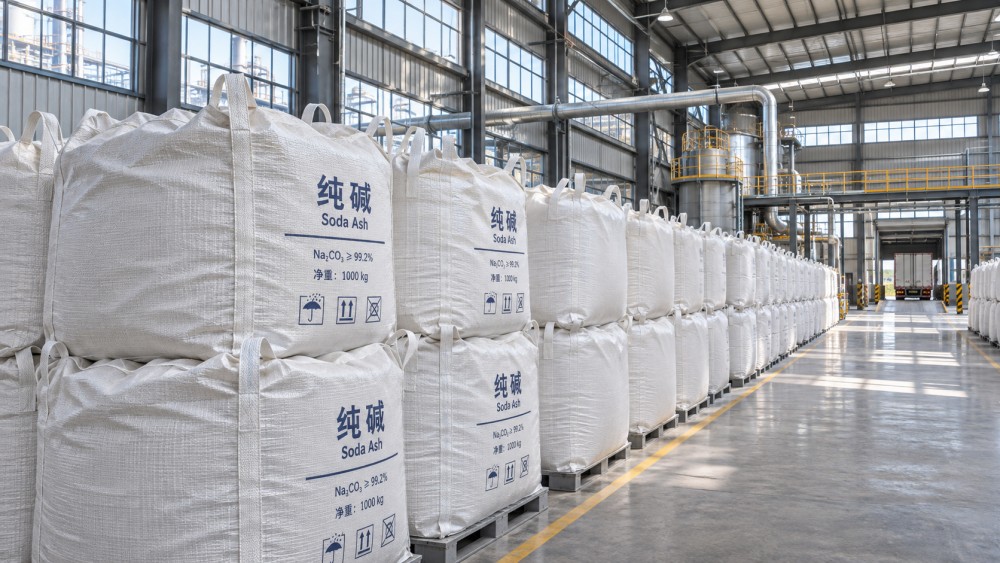
Different stock movements call for separate commercial discussions
Producers and their customers
From an industry perspective, the divergence between light and dense inventory may be more useful in commercial discussions than the small change in the total alone. A buyer seeking dense soda ash may wish to ask suppliers about available quantities, delivery dates and the terms applicable to its own order. A light soda ash buyer may make the same checks without assuming that an increase in reported producer stocks guarantees availability from a particular supplier.
The data do not explain why either category moved. Analysis based on these figures cannot establish whether changes in output, shipments, demand or another factor caused the difference. Nor do the figures establish a new industry rule for allocating stock. Producer-specific quotations and order confirmations would be needed to assess an individual transaction.
Traders and distribution channels
For traders and distributors, the reported split may provide a reason to review the product mix offered to customers. A business handling both grades could compare its commitments against the quantities and delivery windows suppliers are prepared to confirm. That review is a commercial precaution, not a newly announced regulatory requirement.
Analysis suggests that a single aggregate inventory number may conceal differences relevant to separate orders. Traders may therefore find it useful to identify the grade in inquiries, quotations and order records, and to clarify any terms governing substitutions. The supplied data do not say that shortages, delivery delays or changes in trading rules have occurred.
Raw material buyers and processors
For companies purchasing soda ash as an input, the figures may support a review of order timing and grade-specific needs. A processor relying on dense soda ash, for example, could check whether its planned volumes and delivery dates remain covered by supplier commitments. A buyer of light soda ash could separately check the position for its own requirements rather than treating the two reported movements as interchangeable.
Any decision to use a different grade or supplier would require assessment against the buyer's product specifications and process needs. The input does not establish that substitution is technically suitable, commercially available or required. It also provides no evidence that certification or testing requirements have changed.
What procurement teams can verify before acting
Compare dates and categories on the same basis
The reported total has two reference points: it fell from November 9 but was slightly higher than on November 5. Buyers reviewing the figures should keep those comparisons distinct. Describing the total simply as falling, without stating the comparison date, could obscure the increase against the earlier reference point.
It may also be useful to track light and dense soda ash separately when reviewing future inventory reports. A movement in the combined figure does not by itself reveal how each grade has changed. Before making a purchasing decision, a company could check that subsequent data use comparable product categories, units and reporting dates. The supplied information does not explain the data collection method or define the preceding comparison period for the grade-level figures beyond the stated changes.
Confirm supply against actual orders
Inventory held across producers is not the same as stock available to a particular customer. As a practical response, purchasers could ask their suppliers to confirm the grade, quantity, agreed delivery date and order status for upcoming requirements. Where contracts allow changes to schedules or quantities, parties may also review the relevant terms before adjusting orders.
These checks would help distinguish reported market information from the commitments governing an individual transaction. They should not be interpreted as evidence that suppliers have changed their terms or that deliveries are at risk. The data supplied for this article do not include supplier-level inventories, contract terms or delivery performance.
Keep product and transaction records aligned
Businesses may wish to ensure that purchase orders, supplier confirmations and delivery records identify the agreed soda ash grade and quantity consistently. If an alternative product is proposed, the parties could verify the applicable specification and any testing or customer approval needed under their existing arrangements before accepting it.
This is a suggested review of ordinary transaction details, not a claim that a new documentation, testing or certification obligation has been introduced. The input provides no new technical standard or compliance instruction. Any applicable requirements would need to be checked against the actual contract and relevant authoritative materials.
Watch for information that changes the assessment
Further comparable inventory releases could help businesses determine whether the reported changes persist or reverse. Supplier quotations, confirmed lead times and customer orders may also help each company assess its own position. None of those later developments is established by the figures supplied here.
If a policy, trade measure or certification change becomes relevant to a transaction, businesses should verify its scope and effective terms from the appropriate authoritative source. The present inventory report alone does not identify such a measure, and it should not be used to infer that one is pending.
A market reading, with no rule change established
The clearest observation is that the reported stock movement depends on both the product category and the comparison date. Total producer inventory declined slightly from November 9 while remaining marginally above its November 5 level; dense soda ash accounted for the reported decline in the later comparison, while light soda ash increased.
Analysis suggests that these figures are a prompt for closer commercial monitoring, not evidence of a rule being implemented or an enforcement signal. They do not establish the direction of future prices, output, demand or trade. They also do not identify the distribution of stock among individual producers or the quantities available under particular contracts.
Later reports may alter the interpretation if they show different grade-level movements or provide a consistent series over a longer period. Industry feedback and supplier confirmations may help explain the practical consequences, but such information would need to be assessed separately. A change in inventory should not be treated as proof of a policy response or a new compliance obligation.
Use the figures as a reference for the next transaction
The November 12 report provides a snapshot of producer stocks and highlights a difference between light and dense soda ash. Its immediate value for industry participants lies in framing questions about grade, timing and confirmed supply. The modest change in the aggregate total does not support a definitive conclusion about future market conditions or delivery outcomes.
For now, the proportionate response is to compare subsequent data on a consistent basis and verify order-specific details with counterparties. Any assessment of policy, certification or trade requirements should rest on the relevant authoritative documents, not on inventory movements alone.
Basis for the reported figures and further verification
This article is based on the user-provided news title, event date and summary, which attribute the inventory figures to Longzhong Information. The input did not provide a specific official source link; the underlying figures and their reporting methodology therefore remain to be verified. No source link is asserted here.
Future verification may include subsequent releases from the data provider, relevant official announcements where applicable, and industry or company feedback. Readers should separately check any later policy details, certification guidance, trade implementation or changes to purchasing documents before treating them as applicable requirements.
Recommended News