Search
Category
Related Industries
- Thailand Plans Ban on Chemicals for Rare Earth Mining in MyanmarThailand plans a ban on chemicals for rare earth mining in Myanmar. Discover why river pollution prompted the proposal and what it could mean for regional trade.
- How to assess the purity of a strobilurin fungicide technicalAssess strobilurin fungicide technical purity with practical guidance on sampling, identity, impurities, lab methods and supplier documentation.
- BASF Starts Up $1 Billion MDI Plant, Doubling Annual Capacity to 600,000 TonnesBASF's $1 billion Geismar MDI plant reportedly doubles annual capacity to 600,000 tonnes. Explore the potential impact on North American supply and sourcing.
Weekly Insights
Stay ahead with our curated technology reports delivered every Monday.
Thailand Plans Ban on Chemicals for Rare Earth Mining in Myanmar




Thailand announced plans on November 22, 2026, to prohibit the export and transit of chemicals used in rare earth mining in Myanmar, citing cross-border river pollution. The proposed restrictions could affect regional trade in industrial acids, including sulfuric and nitric acid, as well as mining solvents.
The plan responds to pollution linked to rare earth mining in Myanmar’s Shan State. Arsenic, heavy metals and acidic substances from mining have entered the Kok and Sai rivers in northern Thailand, according to the information accompanying the announcement. Thailand also plans to consult China and Myanmar on the issue.
The measure remains a plan. Its practical effect on chemical shipments will depend on how the proposed restrictions are defined and implemented.
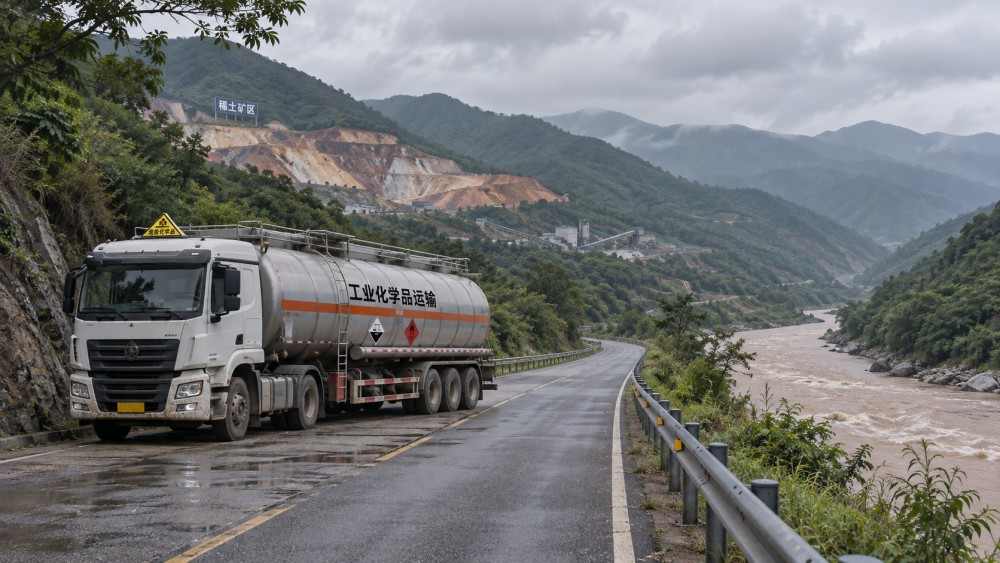
Why chemical shipments are central to the plan
The proposed ban targets materials used in mining rather than rare earth products themselves. By restricting both exports and transit through Thailand, the government is seeking to interrupt a supply route for chemicals associated with the pollution at its source.
That distinction matters for businesses handling industrial chemicals. Sulfuric acid, nitric acid and solvents can have uses beyond rare earth mining, so the way any final rules identify covered products and shipments will be important. A restriction based on a chemical’s intended use, for example, could create different documentation and screening requirements from one based solely on the product being shipped. The announcement does not establish which approach will be adopted.
The proposed coverage of transit is also significant. A shipment could be affected by the rules governing its passage through Thailand as well as by rules on exports from the country. The commercial implications will depend on the final scope of the measure and the routes and uses it covers.
Where the effects could appear first
Chemical suppliers, traders and transport providers involved in shipments connected to mining in Myanmar would be among those most directly exposed if the plan takes effect. They may need to establish whether particular products, destinations and intended uses fall within the restrictions. The details of any compliance requirements will depend on the eventual rules.
For buyers and sellers of industrial acids, the immediate commercial question is whether a shipment can continue under the final policy. Changes in permitted routes or supply arrangements could also affect delivery planning and transaction costs. The announcement alone does not establish the scale of those effects or whether prices will change.
Mining operators that rely on covered chemicals could face supply constraints if the restrictions limit their access. The extent of any effect on mining activity, however, would depend on the chemicals covered, enforcement and the availability of other lawful supplies. A proposed restriction on chemical movements does not by itself establish how much rare earth production will be affected.
What to watch as the proposal develops
The key details are the products and activities covered, how intended use will be assessed, and when any restrictions would take effect. The treatment of transit shipments and the procedures used to enforce the rules will also shape the impact on regional trade.
Thailand’s planned consultations with China and Myanmar add a cross-border dimension to the response. Their outcome may influence how the pollution issue and associated chemical supply chains are addressed, but the announcement does not specify what the discussions will produce.
For now, the clearest development is Thailand’s intention to use chemical trade restrictions to address pollution entering the Kok and Sai rivers. The eventual consequences for chemical flows and mining supply will turn on the final policy and its implementation.
Recommended News